Insights on AI-Accelerated Engineering
How we plan, build, and ship software faster — without cutting corners.
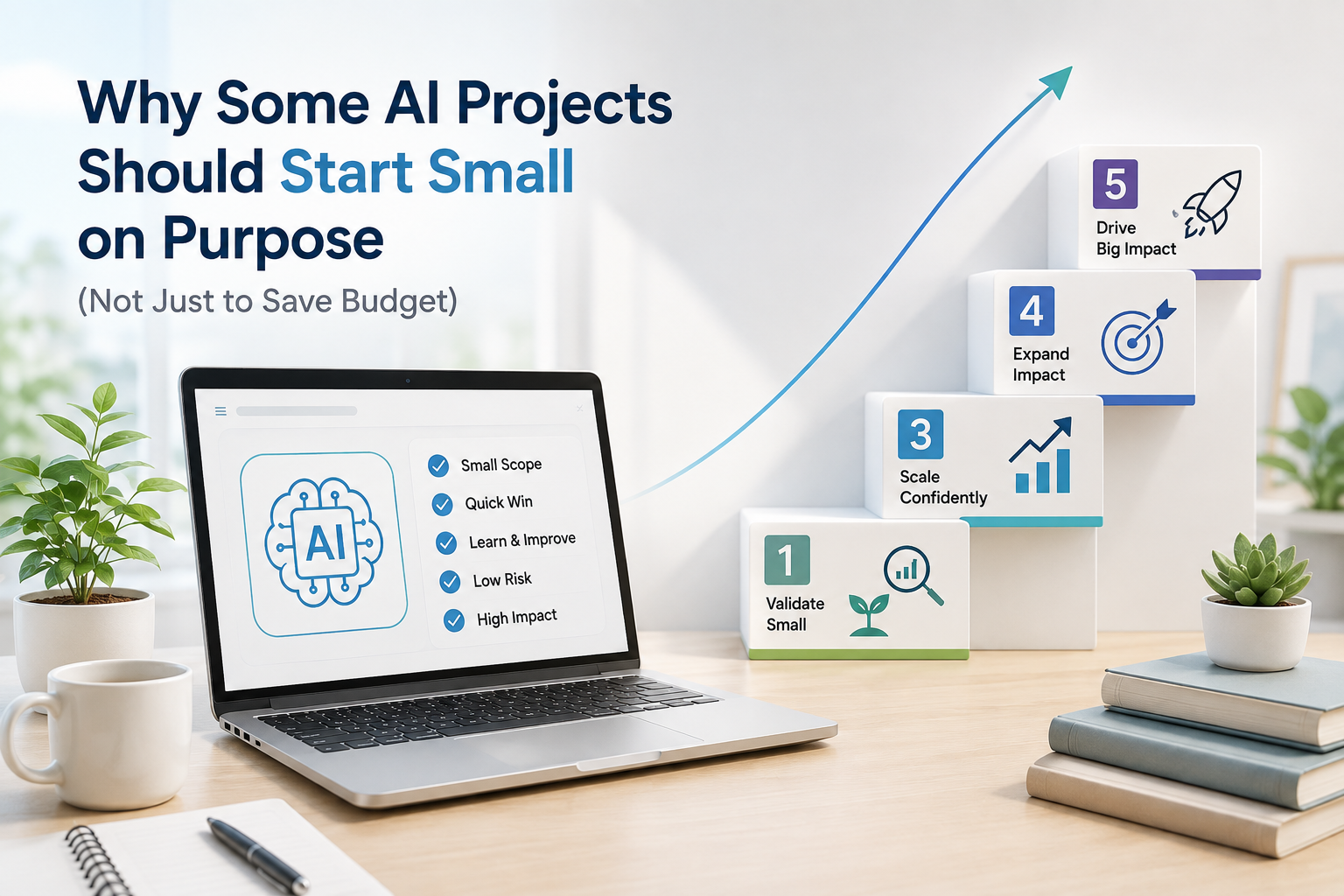
What "Explainable AI" Means for Non-Technical Decision-Makers
"Explainable AI" gets discussed as a technical feature. For business leaders, it's actually a risk and trust question. Here's what it means in practical terms.
Read more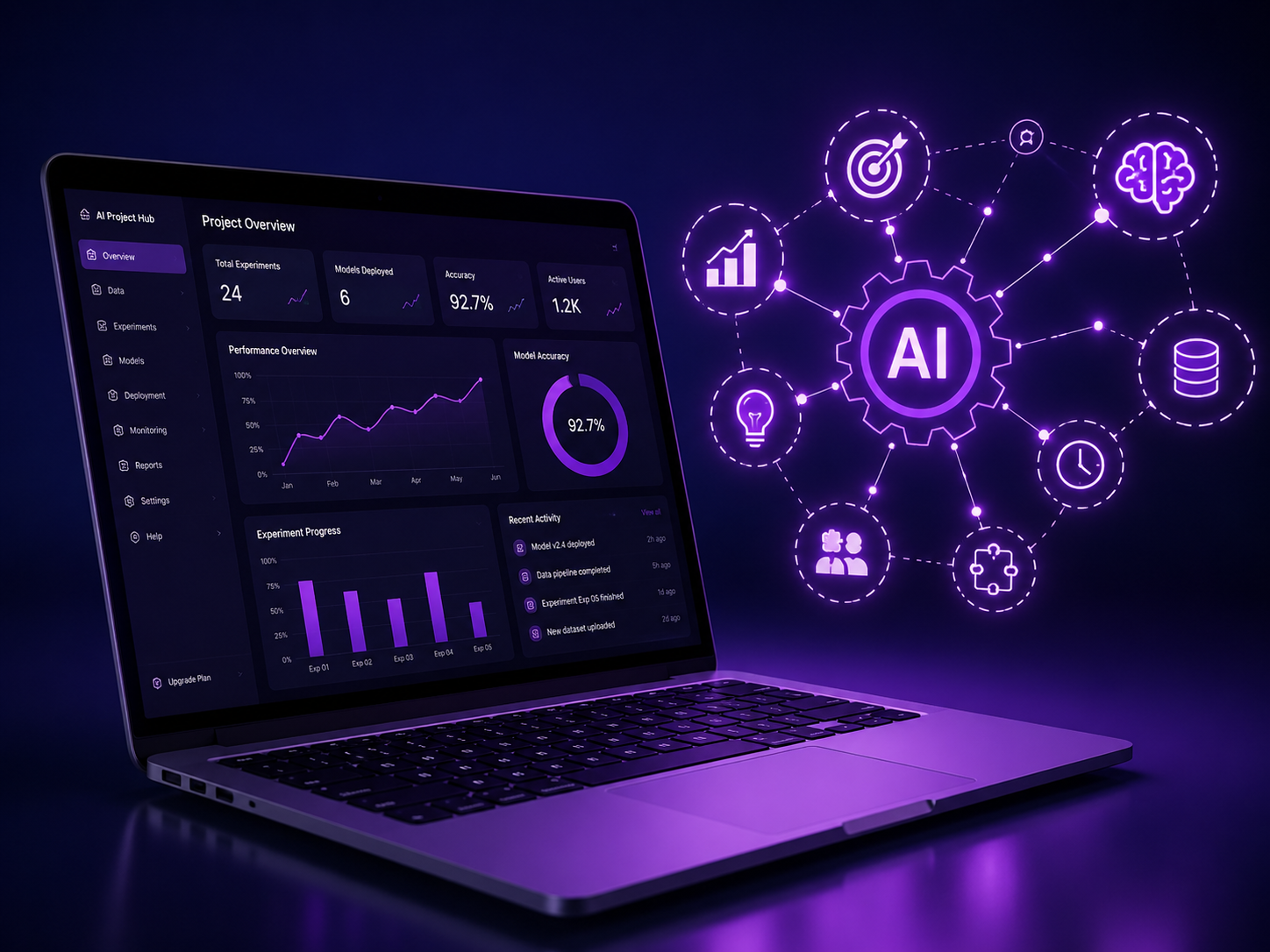
Why Some AI Projects Should Start Small on Purpose (Not Just to Save Budget)
Starting small with AI is often framed as a budget compromise. In practice, it's frequently the smarter strategic choice, regardless of what the budget allows.
Read more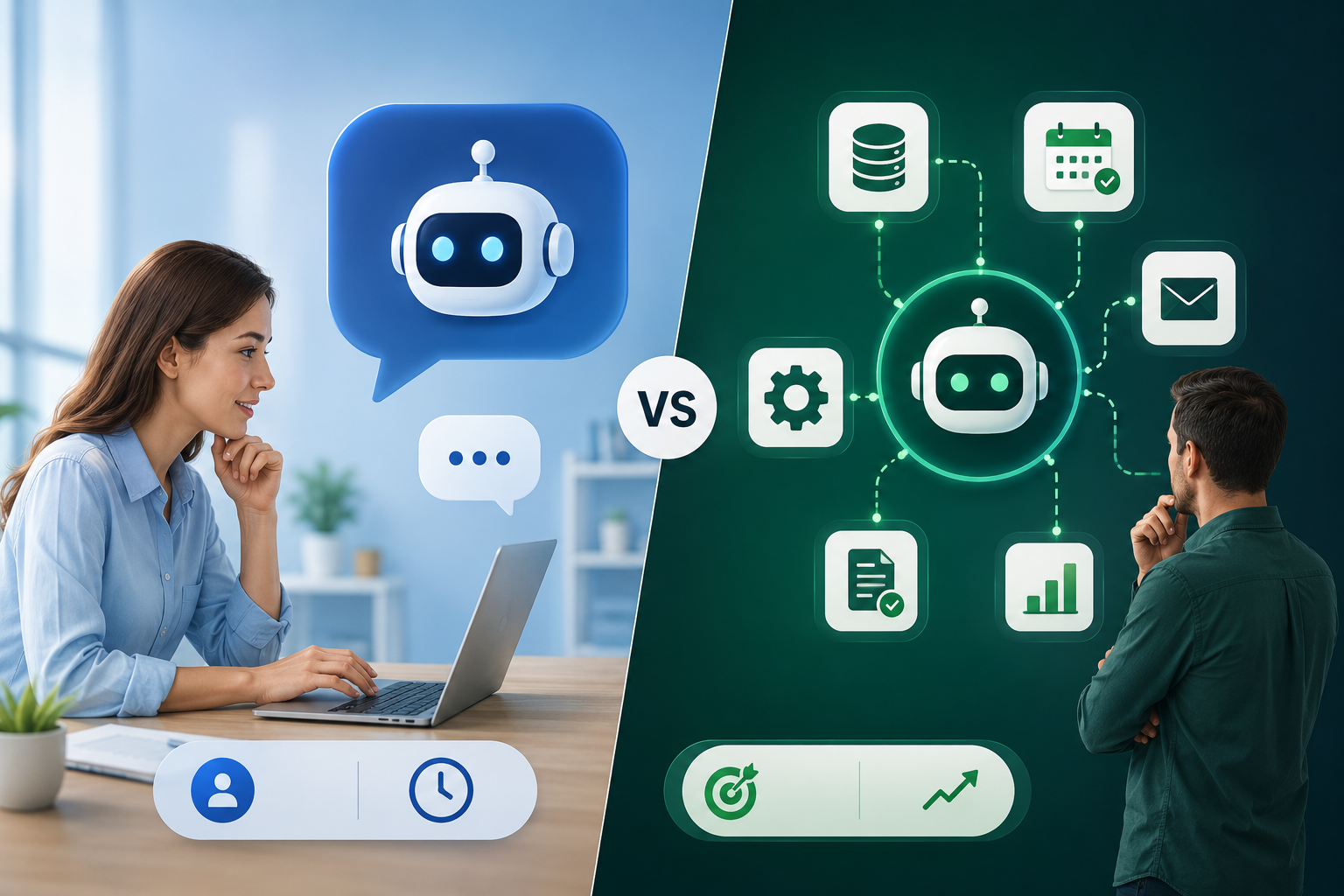
The Difference Between an AI Assistant and an AI Agent (and Why It Changes Your Budget)
These two terms get used interchangeably in most sales conversations. They describe fundamentally different systems, with fundamentally different price tags. Here's the actual distinction.
Read more
AI Chatbots vs Live Chat Support: When You Still Need a Human on Standby
Full automation isn't always the goal, and it isn't always the right call. Here's how to decide how much of your support should be automated versus staffed by a human.
Read more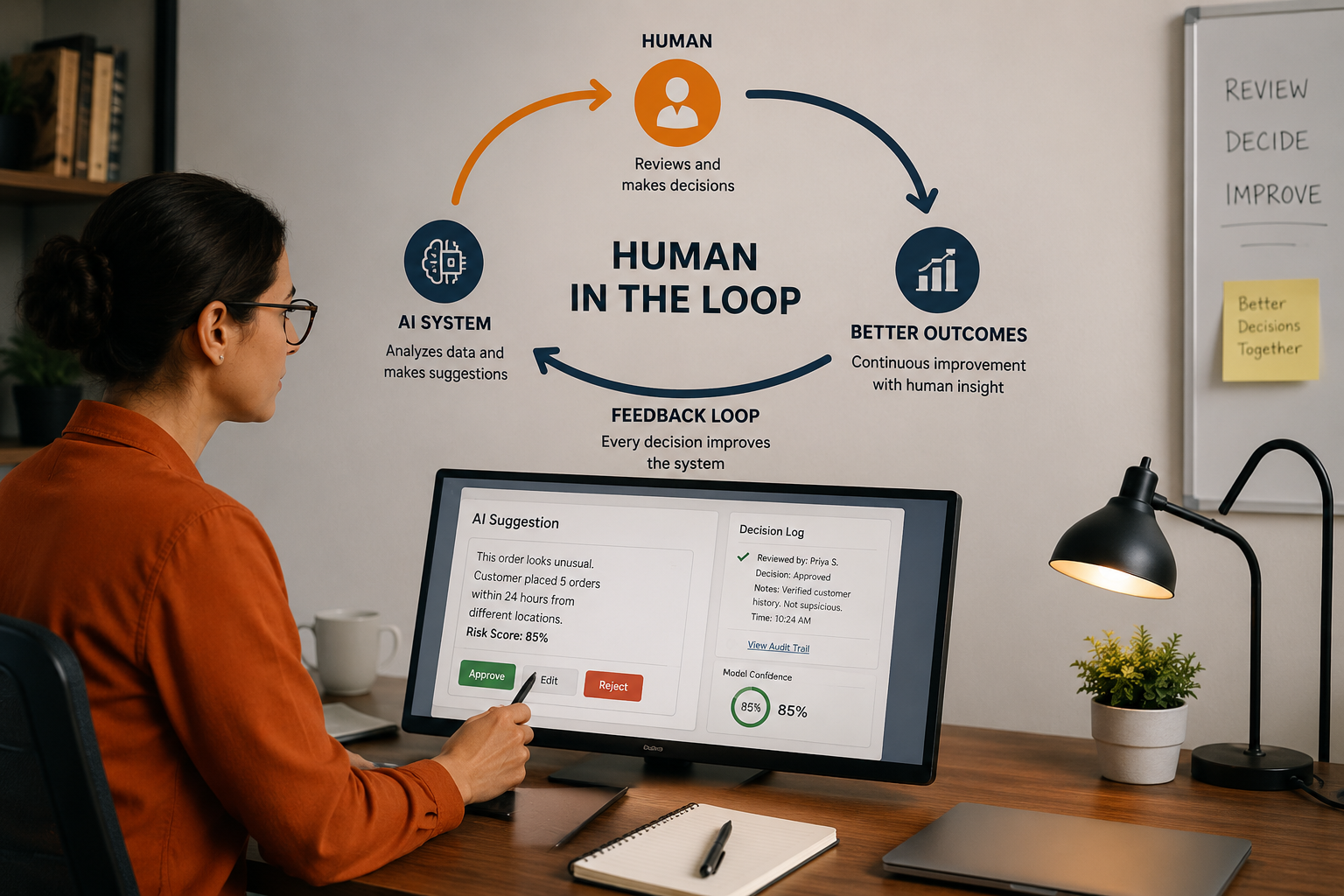
What "Human in the Loop" Actually Means in Practice (Not Just as a Buzzword)
"Human in the loop" gets used to describe almost any AI system that involves a person somewhere. In practice, it means very specific things, and getting them right is what actually makes an AI system trustworthy.
Read more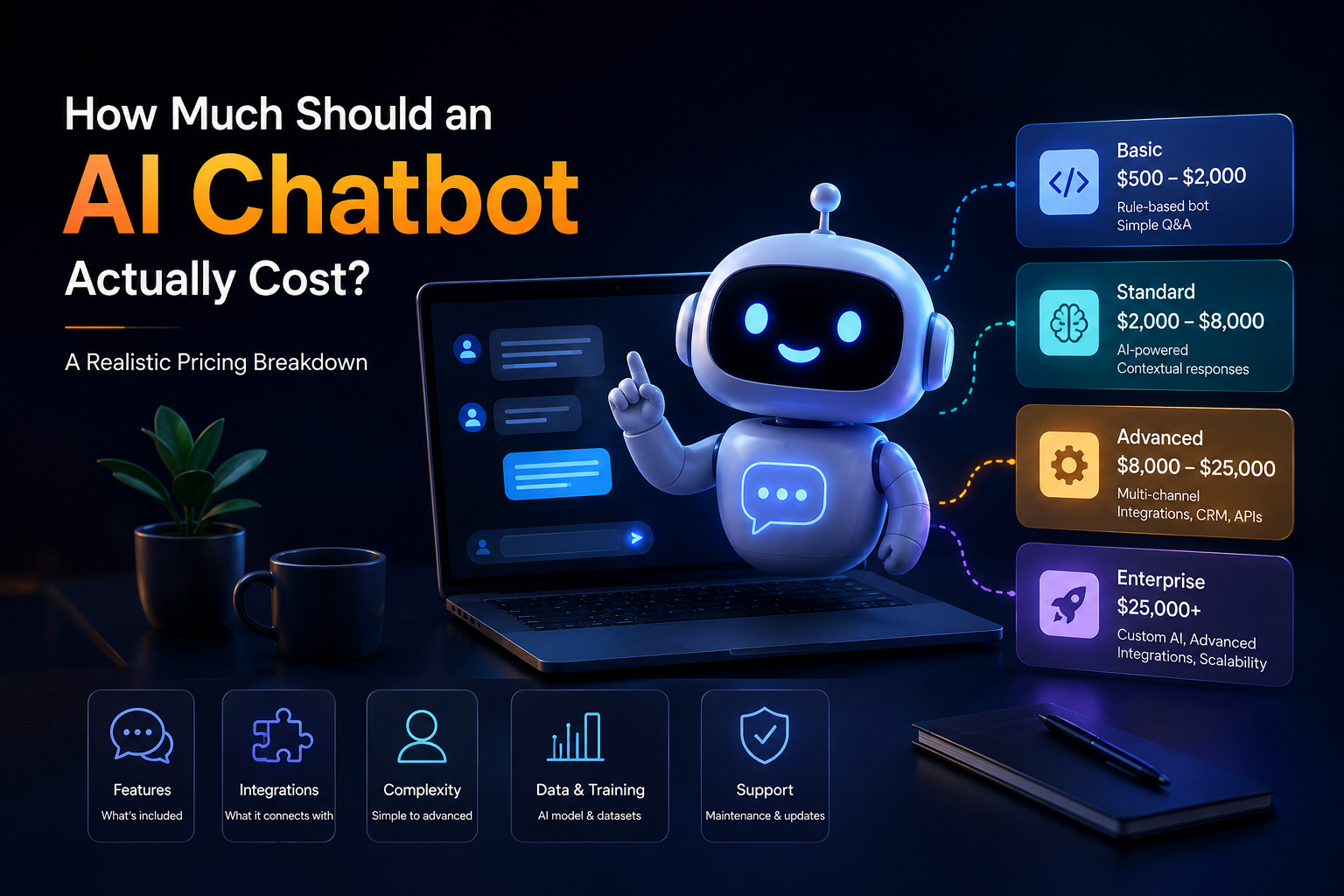
How Much Should an AI Chatbot Actually Cost? A Realistic Pricing Breakdown
Chatbot pricing varies wildly, and most quotes don't explain why. Here's a realistic, factor-by-factor breakdown of what actually drives AI chatbot cost.
Read more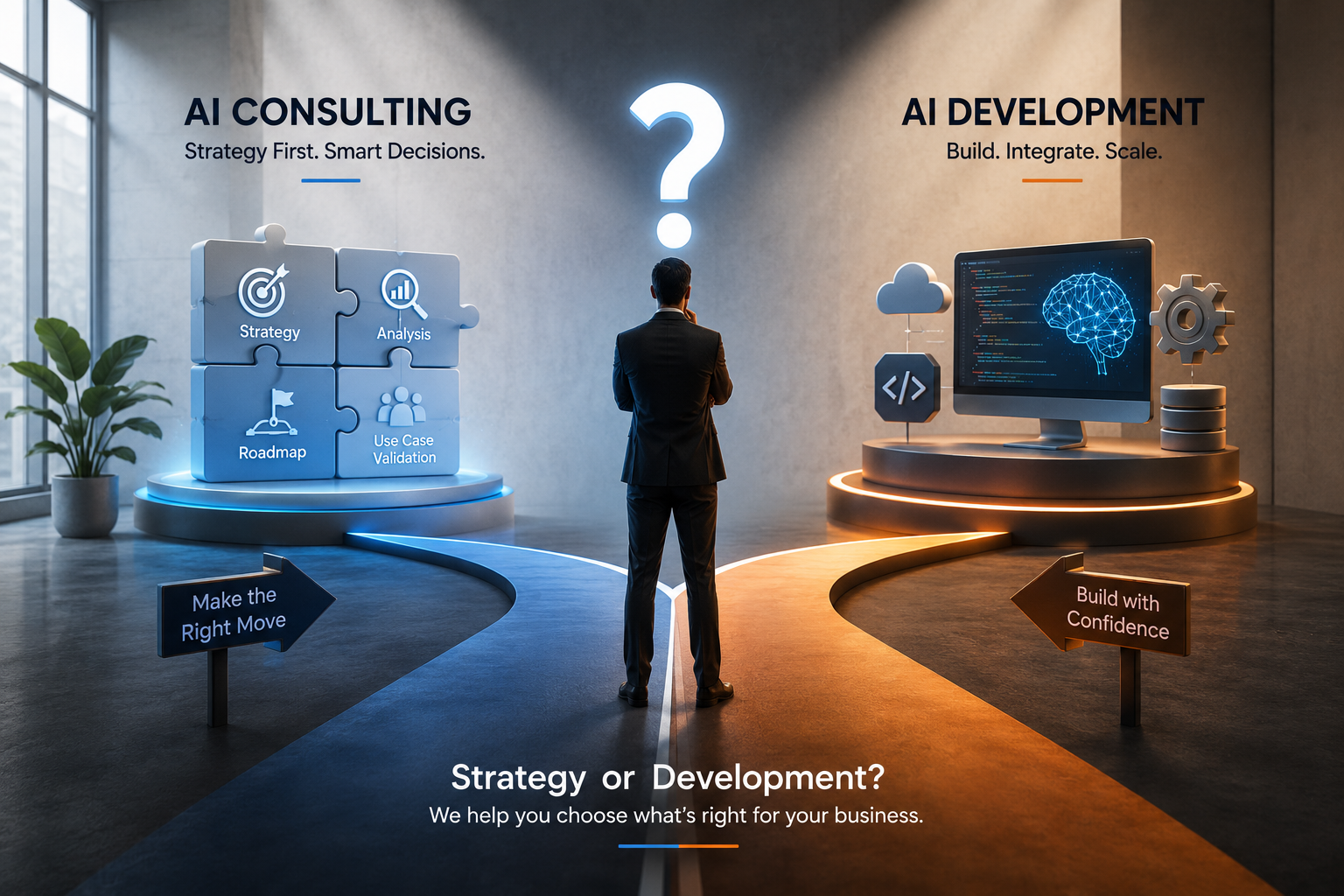
AI Consulting vs AI Development: Do You Need Strategy First or Just a Build?
Some businesses need an AI roadmap before anything gets built. Others already know exactly what they need. Here's how to tell which situation you're actually in.
Read more
What to Ask Before Letting an AI Agent Take Real Actions (Not Just Answer Questions)
An AI agent that answers questions carries limited risk. One that sends emails, updates records, or triggers workflows carries a different kind of risk entirely. Here's what to ask before crossing that line.
Read more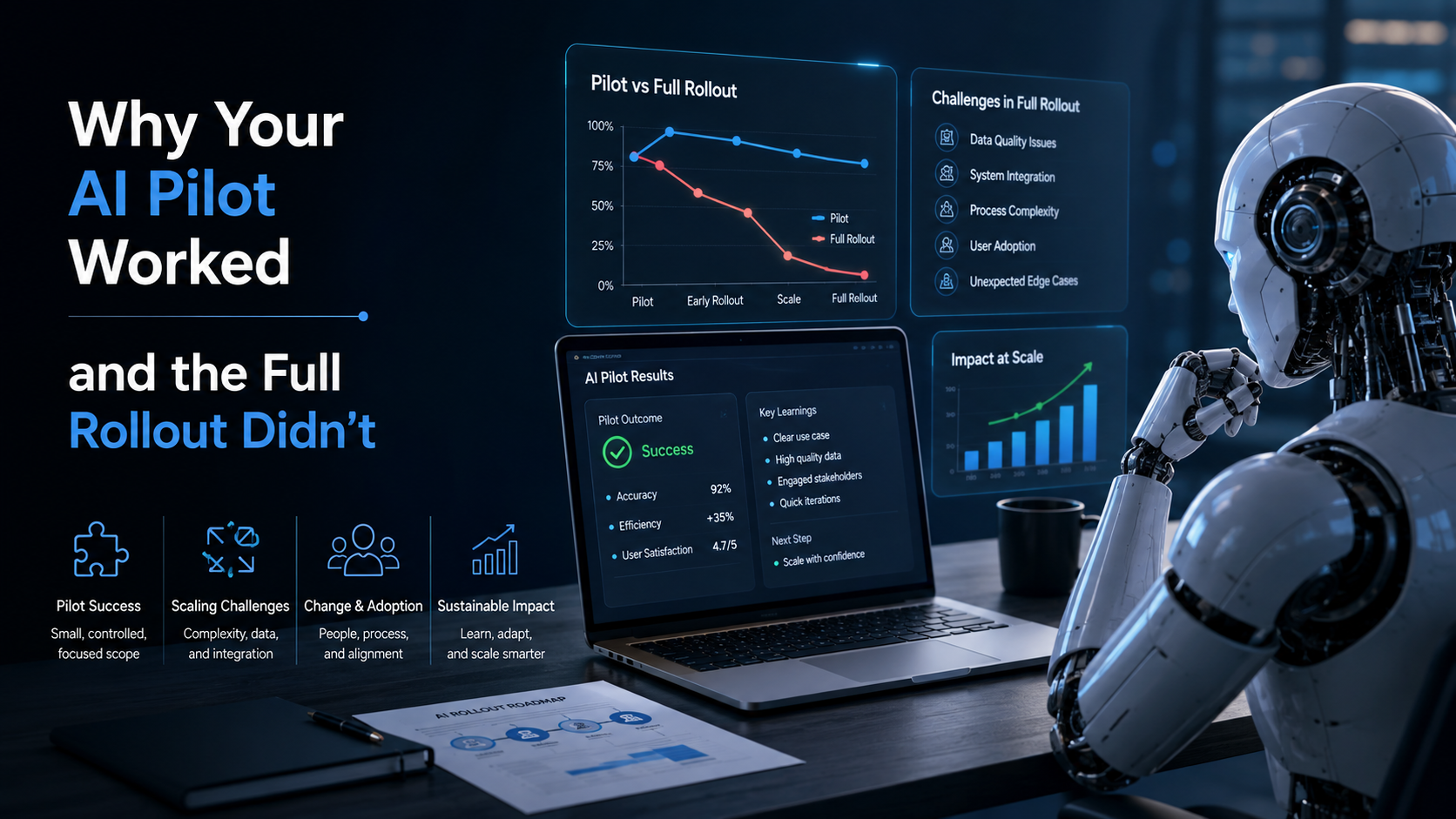
Why Your AI Pilot Worked and the Full Rollout Didn't
A successful AI pilot doesn't guarantee a successful rollout. Here's why the gap between the two is common, and what actually causes it.
Read more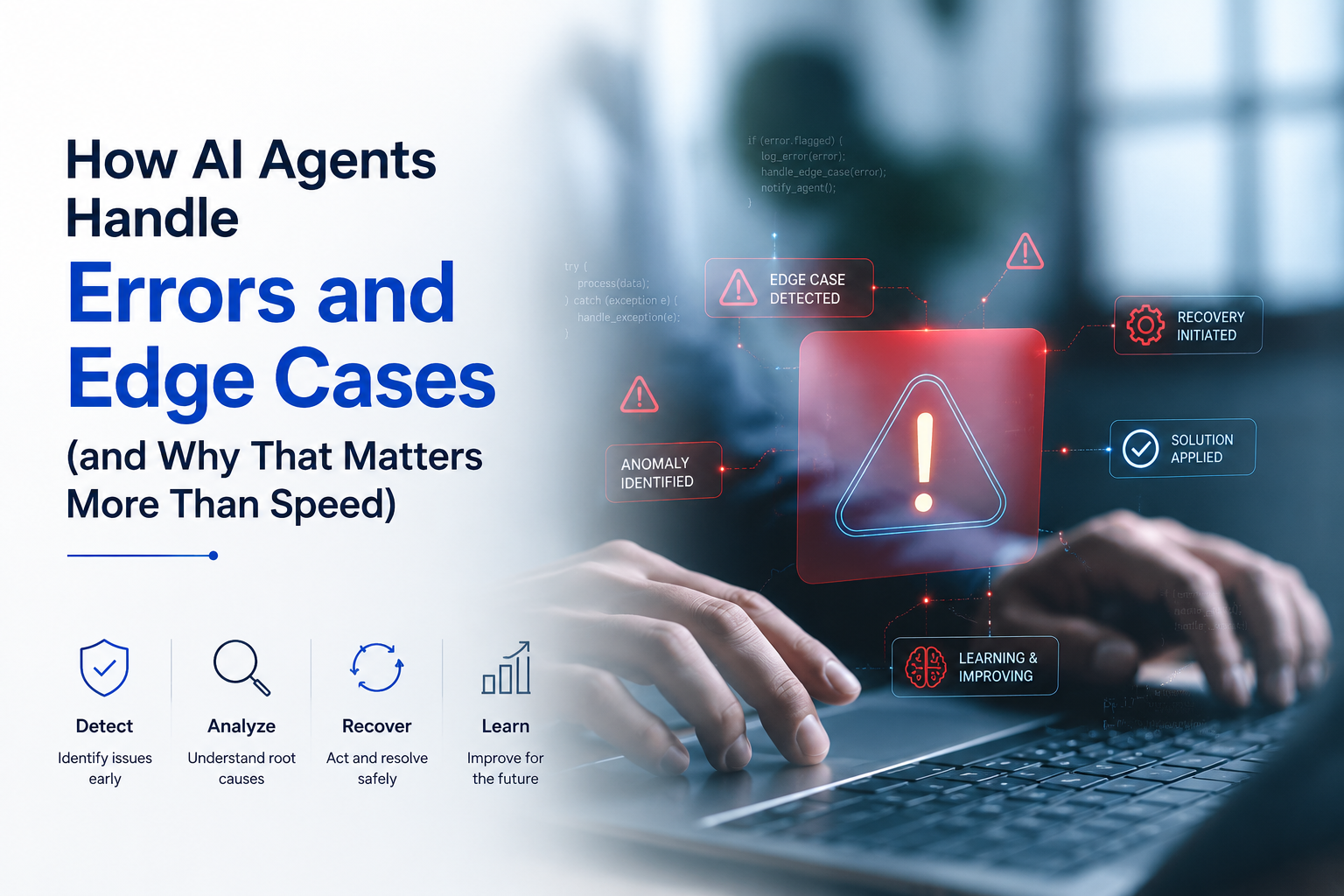
How AI Agents Handle Errors and Edge Cases (and Why That Matters More Than Speed)
A fast AI agent that fails silently on edge cases is more dangerous than a slower one that fails visibly. Here's what actually separates a reliable AI agent from a fragile one.
Read more
What "AI-Ready Data" Actually Means for Your Business
"Get your data AI-ready" is common advice that rarely comes with a concrete definition. Here's what it actually means in practical terms, and how to assess where your business stands.
Read more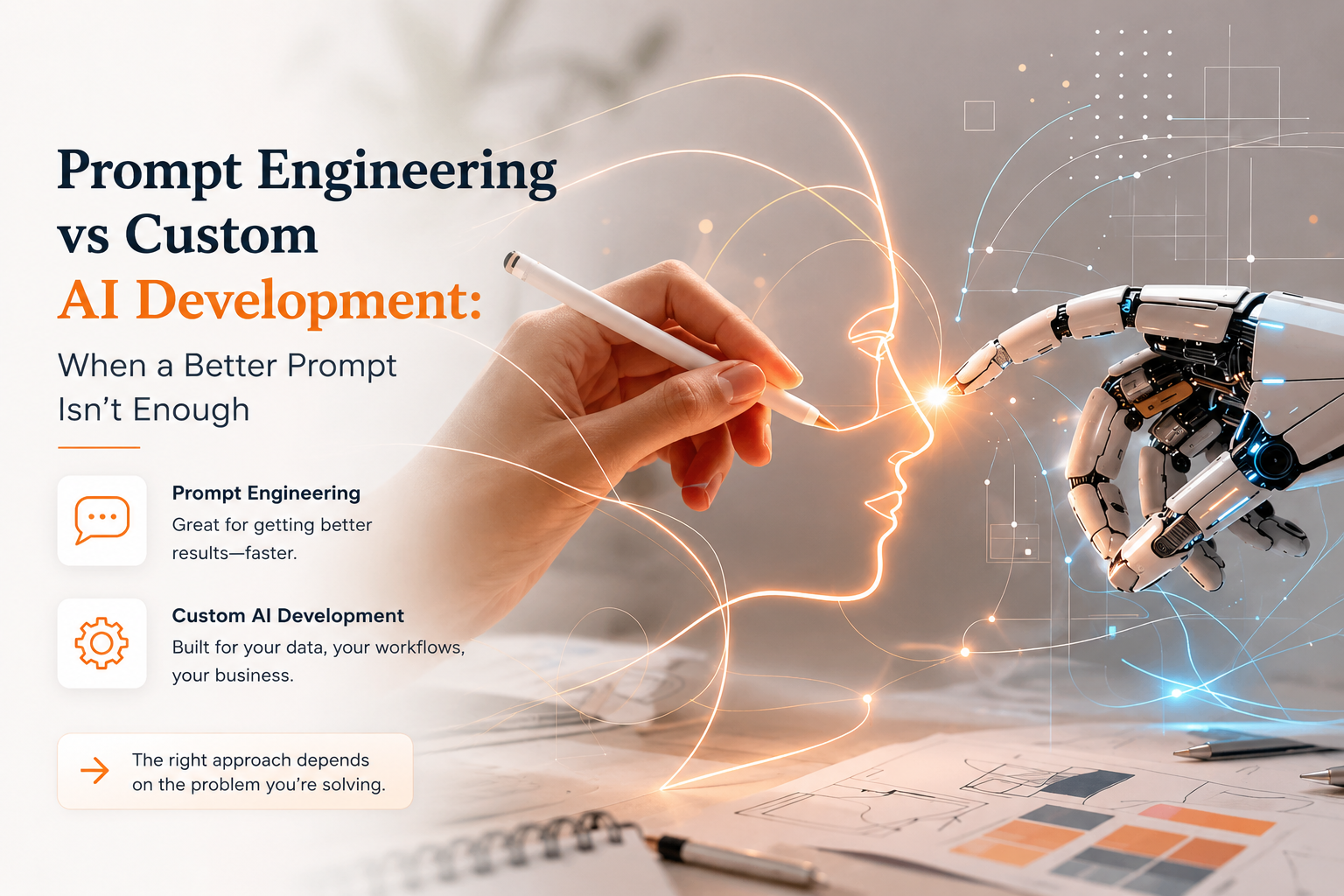
Prompt Engineering vs Custom AI Development: When a Better Prompt Isn't Enough
A well-crafted prompt can solve a surprising number of problems. It can't solve all of them. Here's how to tell when you've hit the ceiling of prompt engineering and actually need custom development.
Read more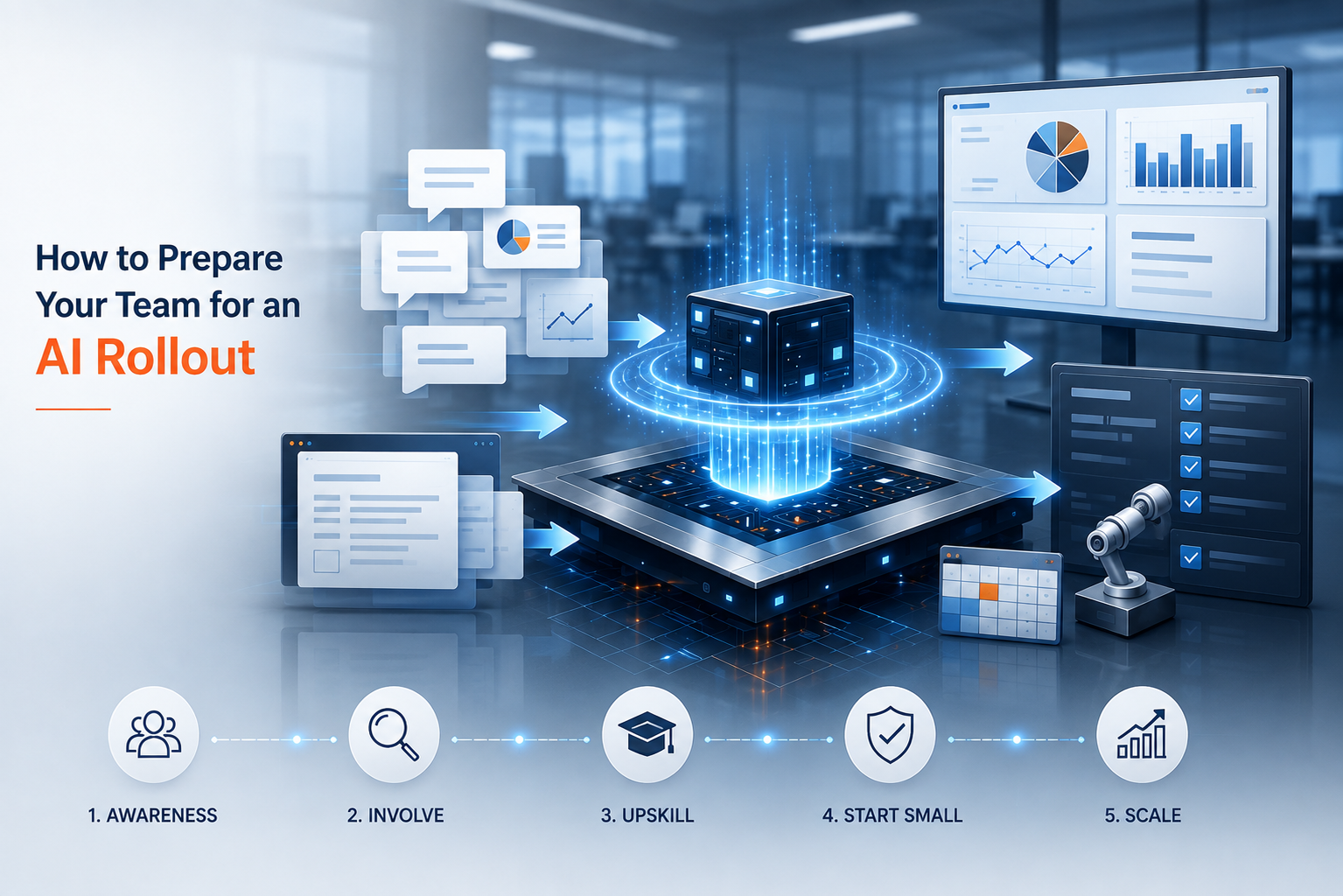
How to Prepare Your Team for an AI Rollout (Without a Change-Management Disaster)
The biggest risk in an AI rollout usually isn't the technology. It's how your team responds to it. Here's how to introduce AI tools without triggering the resistance that derails adoption.
Read more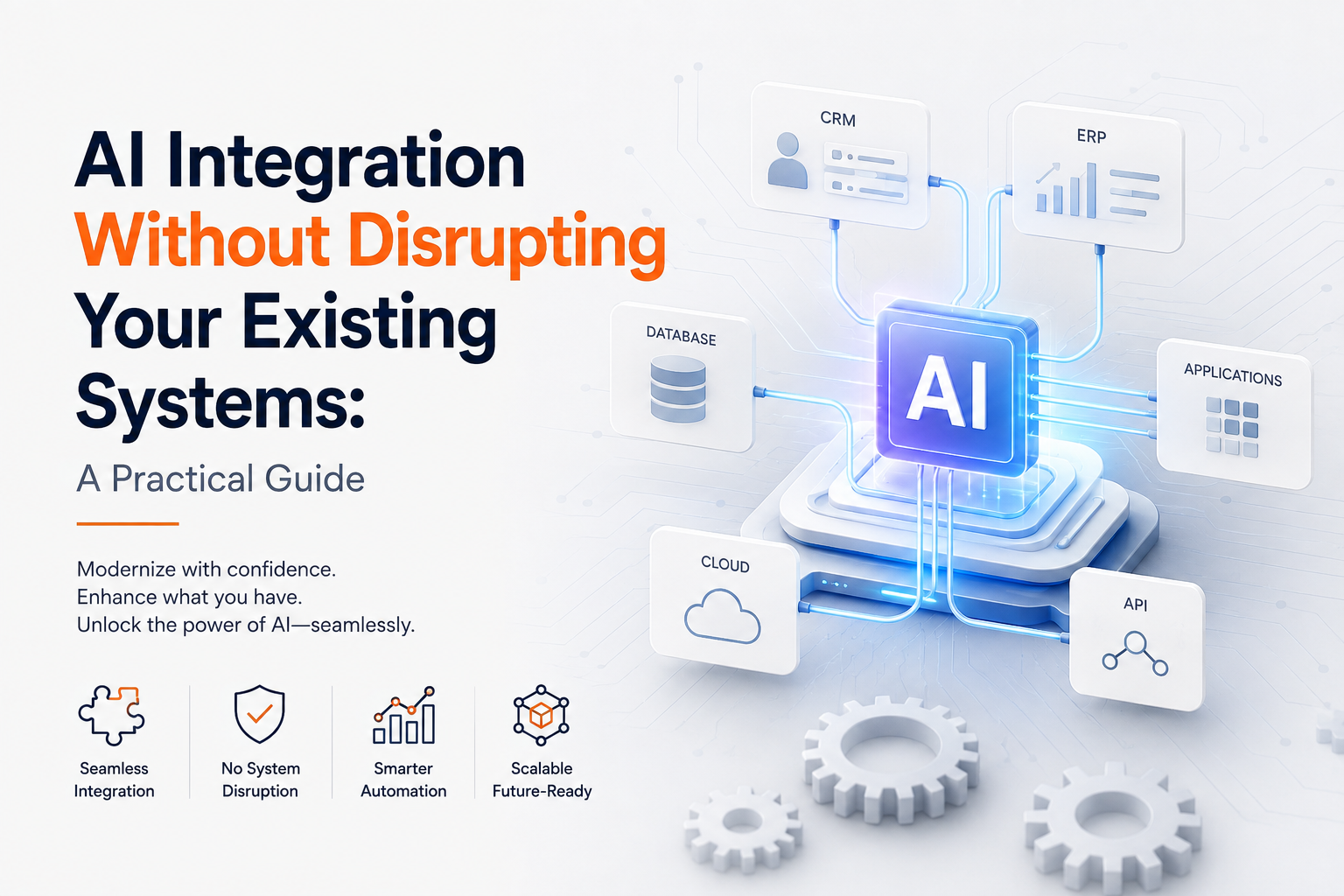
AI Integration Without Disrupting Your Existing Systems: A Practical Guide
You don't need to rip and replace your systems to adopt AI. Here's a practical guide to layering AI into your existing tools and workflows safely.
Read more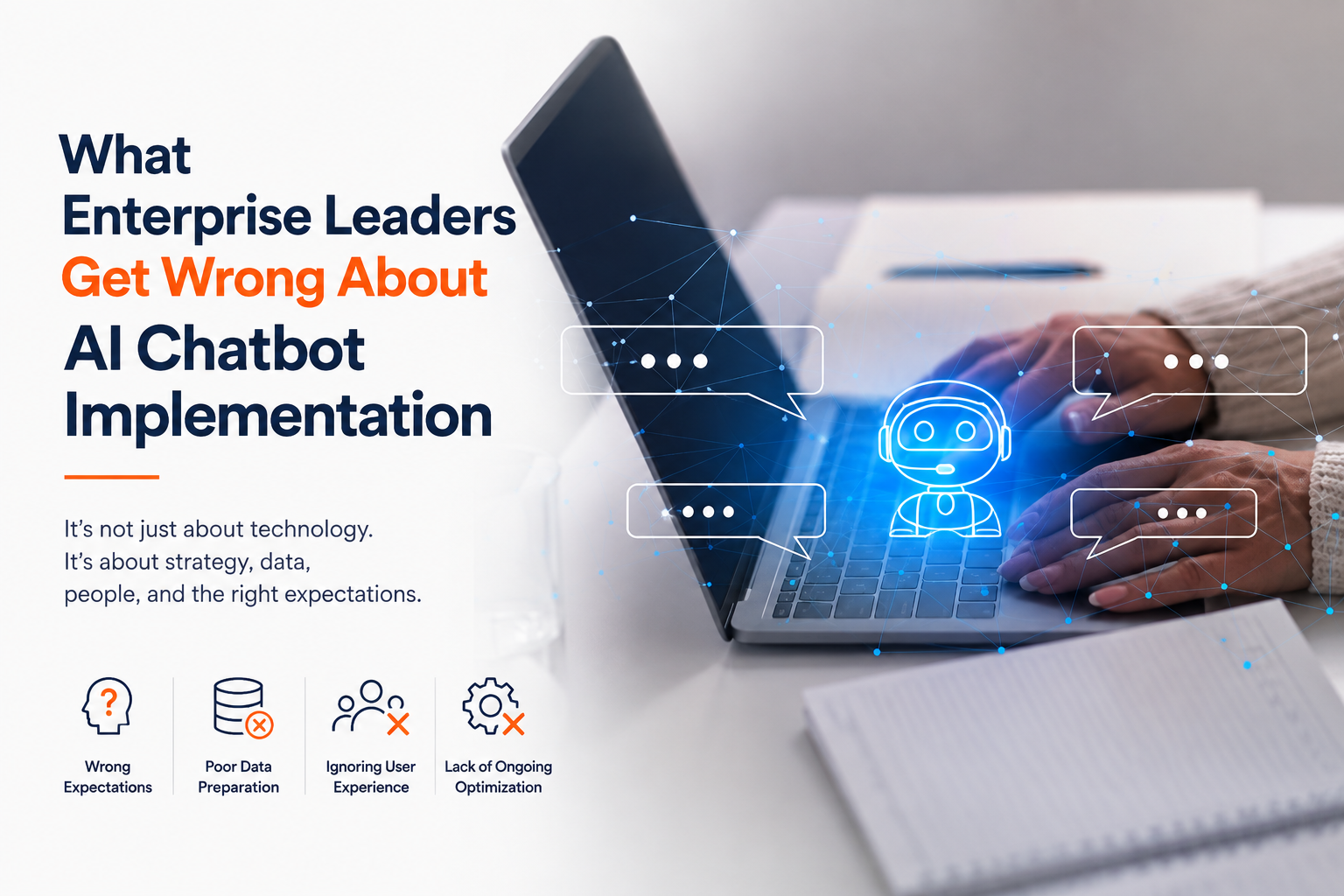
What Enterprise Leaders Get Wrong About AI Chatbot Implementation
Most failed AI chatbot projects fail before development even starts. Here are the mistakes enterprise leaders repeatedly make, and how to avoid them.
Read more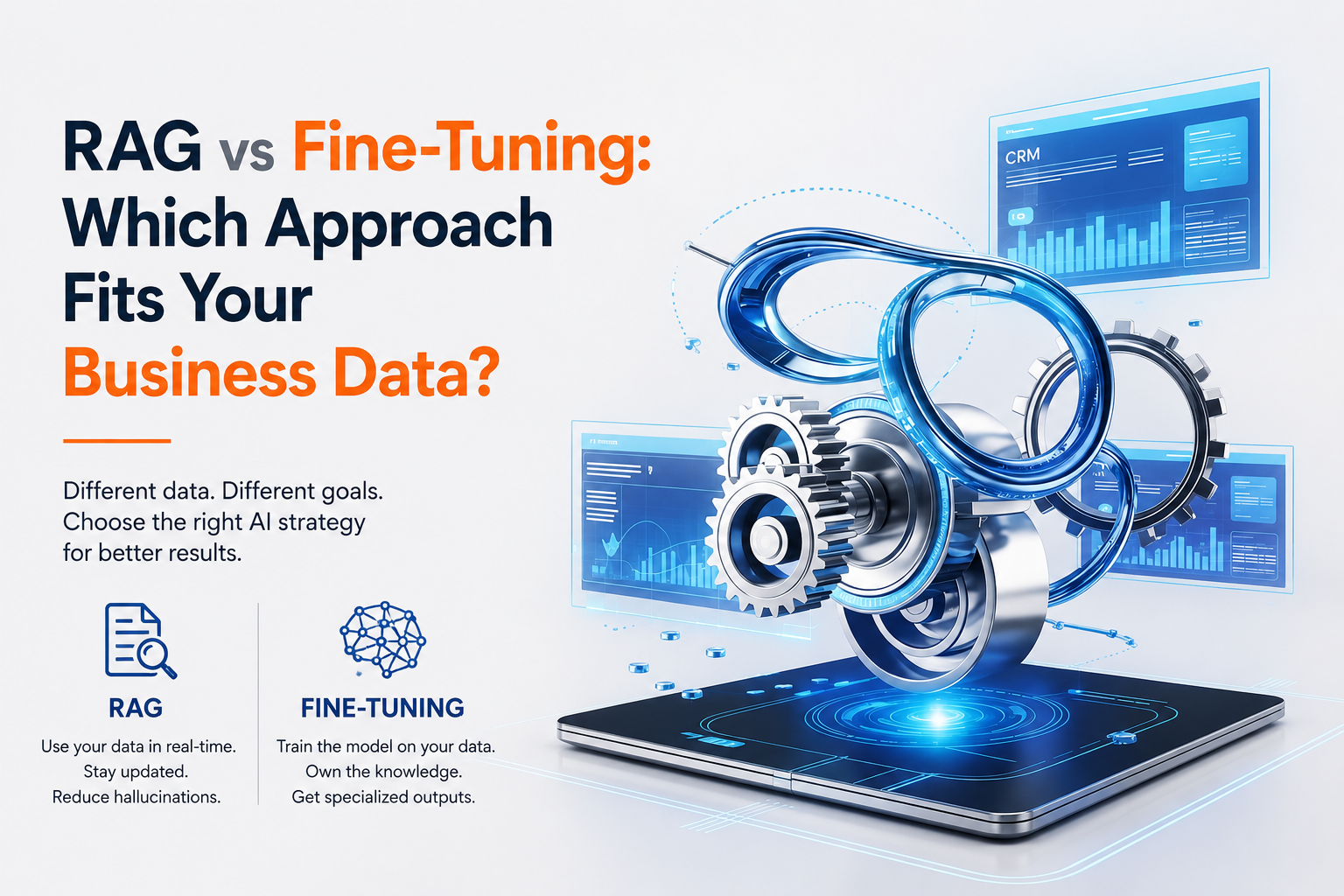
RAG vs Fine-Tuning: Which Approach Fits Your Business Data?
RAG and fine-tuning solve different problems. Here's a clear, business-focused breakdown of when each approach fits your data and use case.
Read more
How to Know If Your Business Actually Needs a Custom AI Agent (vs. Off-the-Shelf Tools)
Not every business needs a custom AI agent. Here's a practical framework for deciding when off-the-shelf AI tools are enough, and when custom development actually pays off.
Read more
What We Actually Check in a Pre-Launch Readiness Review
QA confirms the product works. A readiness review confirms everything around the product is ready for it to go live. Here's exactly what we check before we say yes
Read more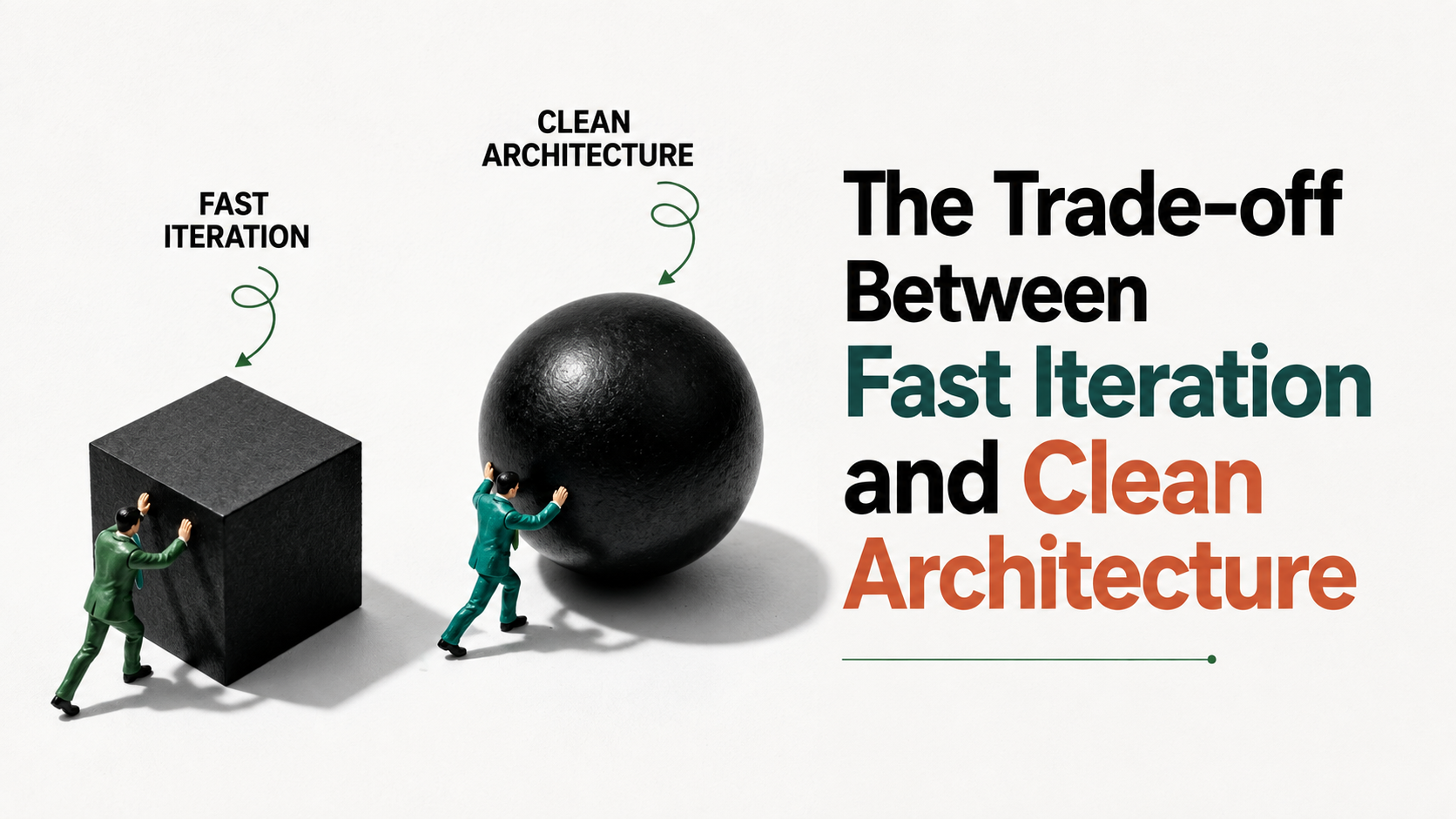
The Trade-off Between Fast Iteration and Clean Architecture
Move fast now, or build it right the first time - the trade-off is real, but treating it as a single fixed choice for an entire project is where most teams get it wrong.
Read more
Why We Cap How Many Projects Run in Parallel
Taking on more parallel work looks like growth. Past a certain point, it quietly becomes the thing that makes every project worse. Here's how we decide the actual limit.
Read more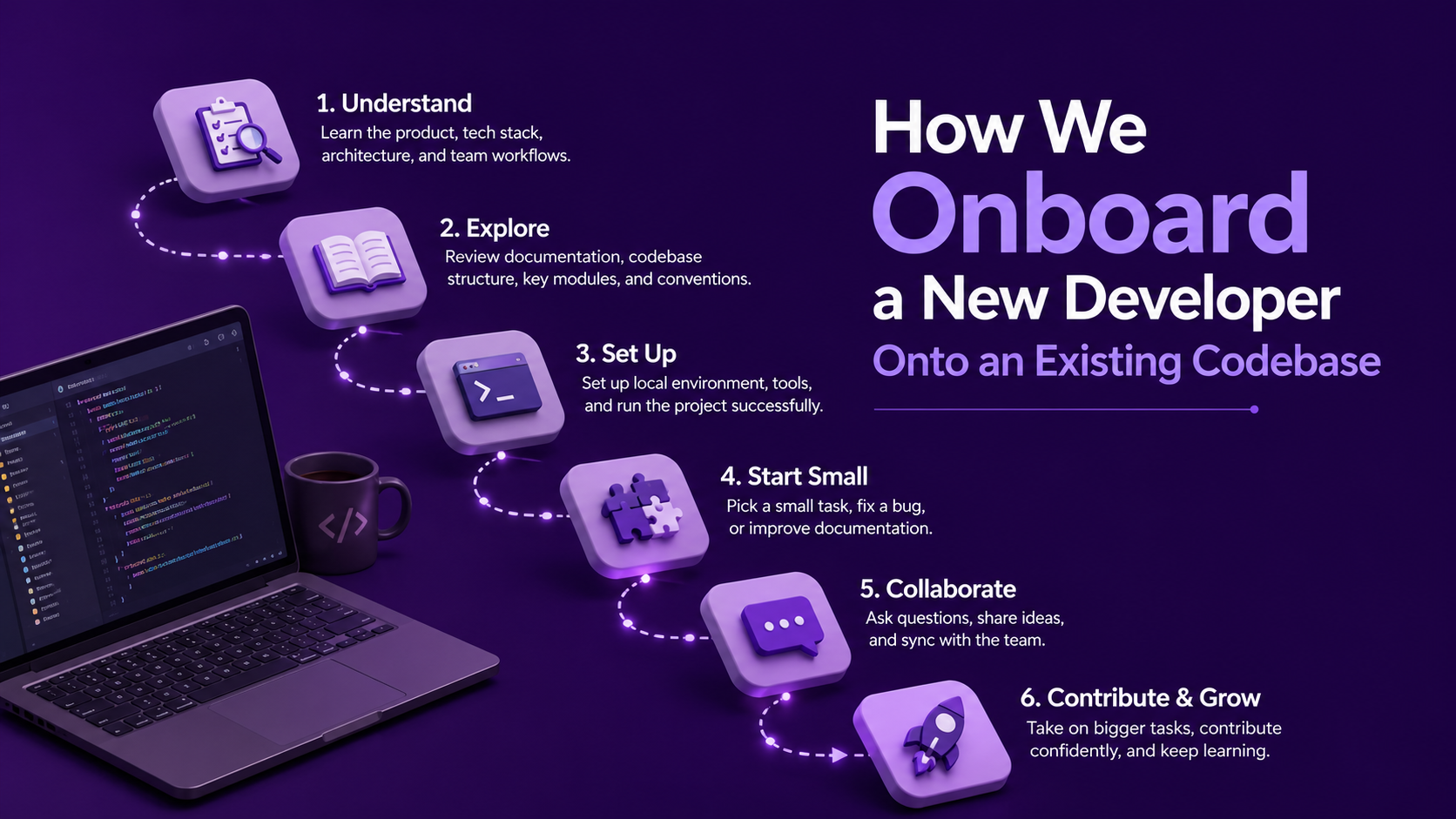
How We Onboard a New Developer Onto an Existing Codebase
Getting productive on unfamiliar code usually takes longer than anyone plans for. Here's the actual process we use to shorten that gap without cutting corners.
Read more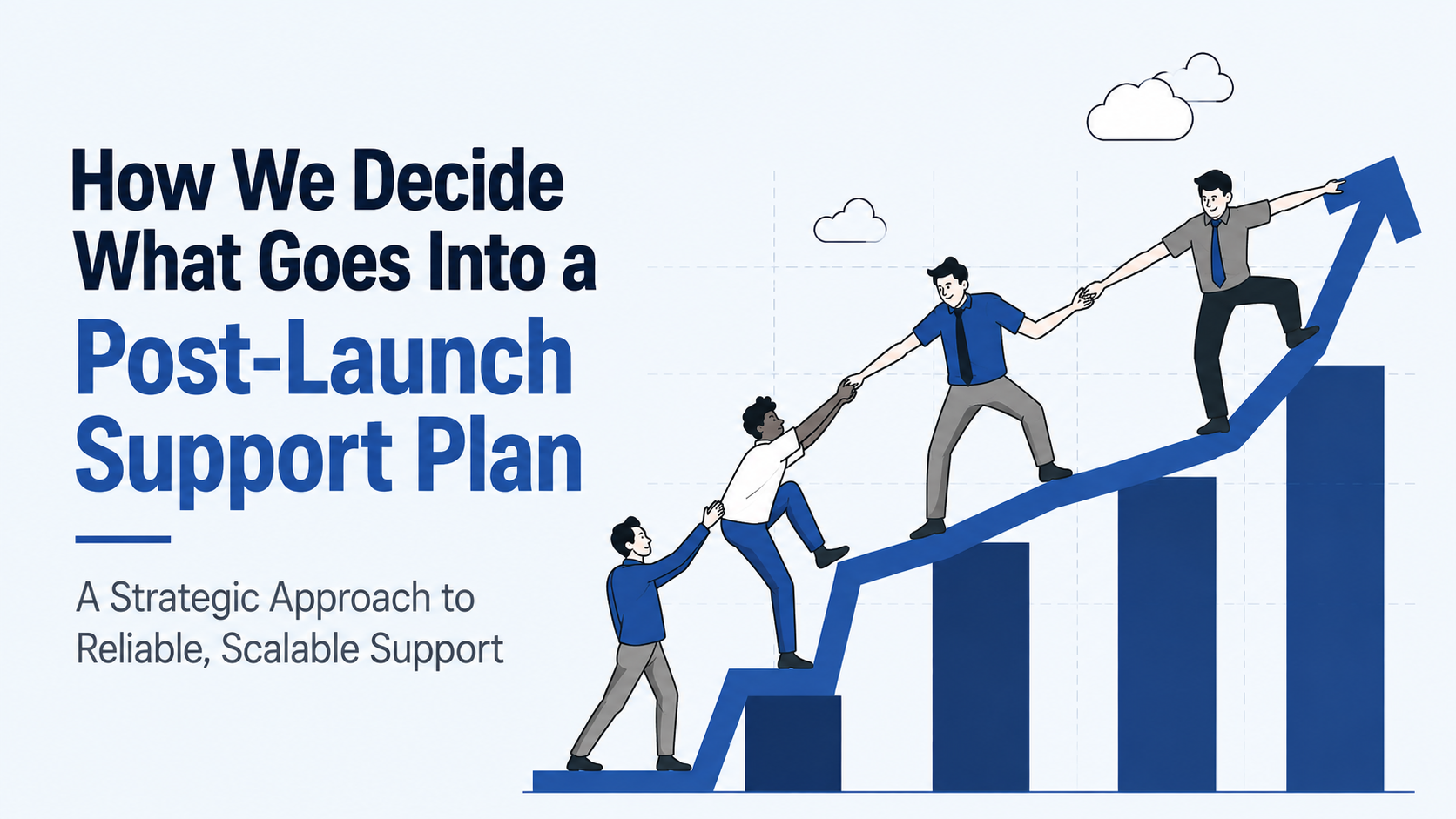
How We Decide What Goes Into a Post-Launch Support Plan
Launch isn't the finish line, but "support" means different things to different projects. Here's how we actually decide what's included by default and what gets scoped separately.
Read more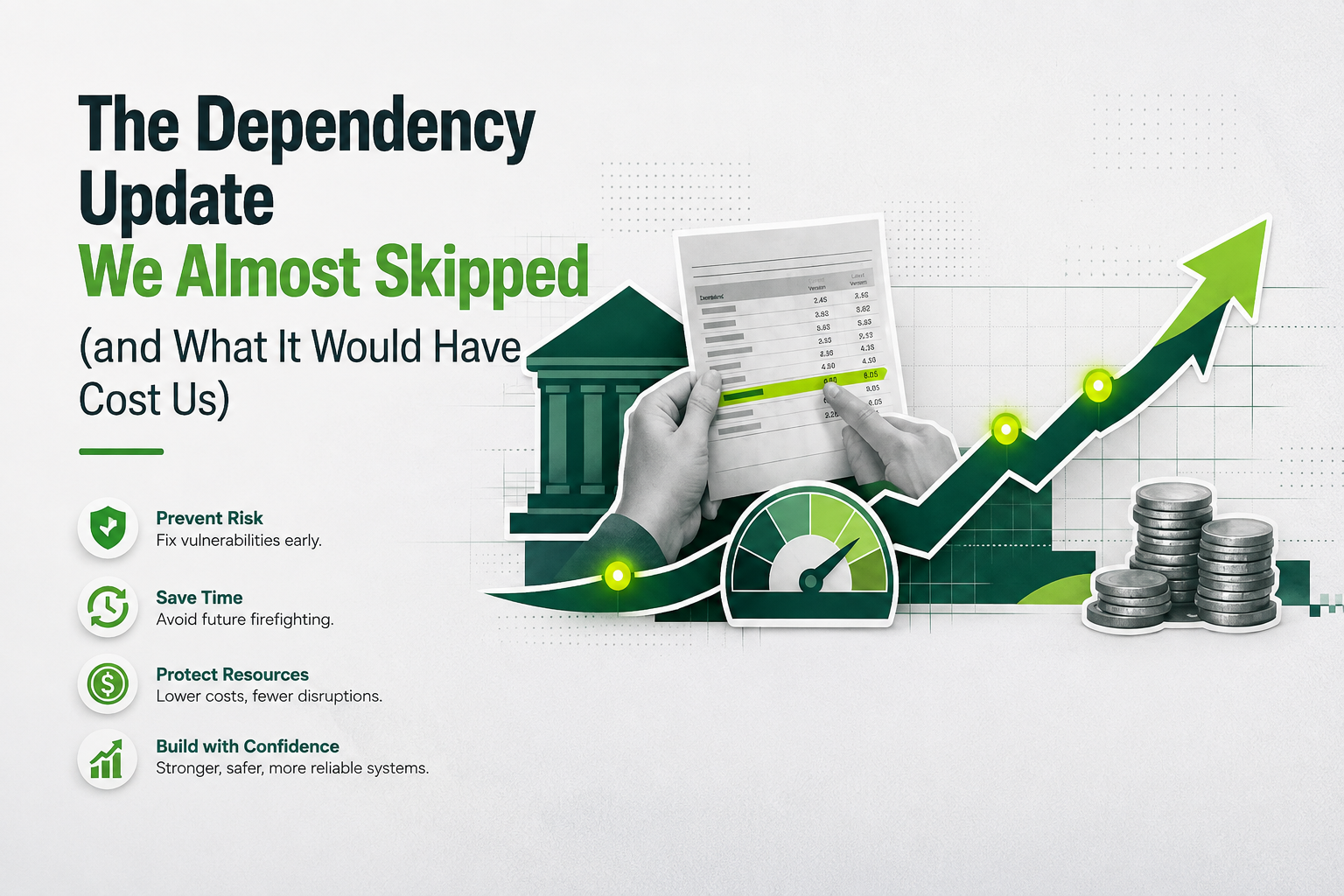
The Dependency Update We Almost Skipped (and What It Would Have Cost Us)
A routine dependency update sat in our backlog for weeks, deprioritized as low-risk maintenance. It wasn't. Here's what changed our approach to dependency management after we looked closer.
Read more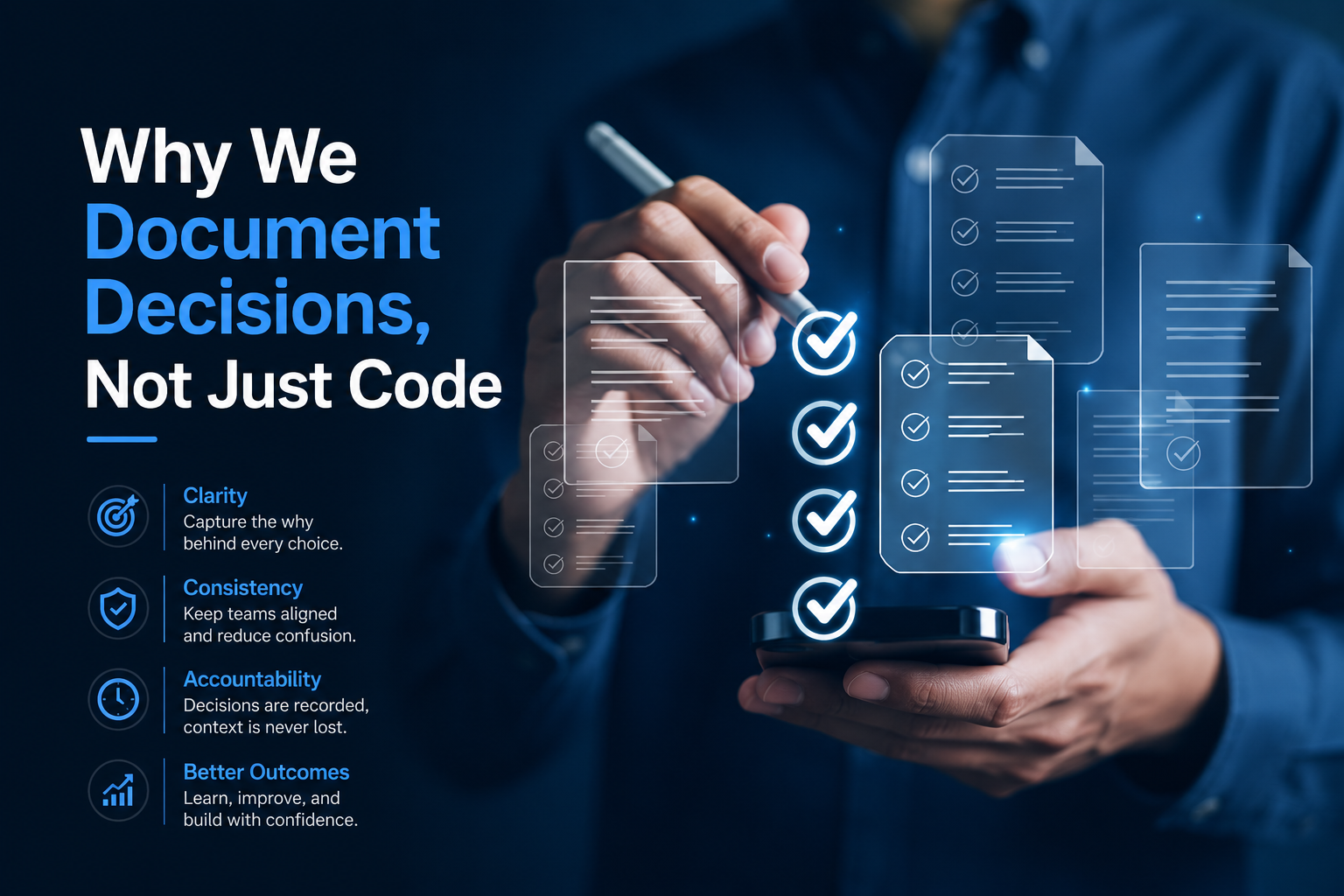
Why We Document Decisions, Not Just Code
Code tells you what a system does. It rarely tells you why it was built that way. Here's the specific documentation practice we use to preserve the reasoning, not just the result.
Read more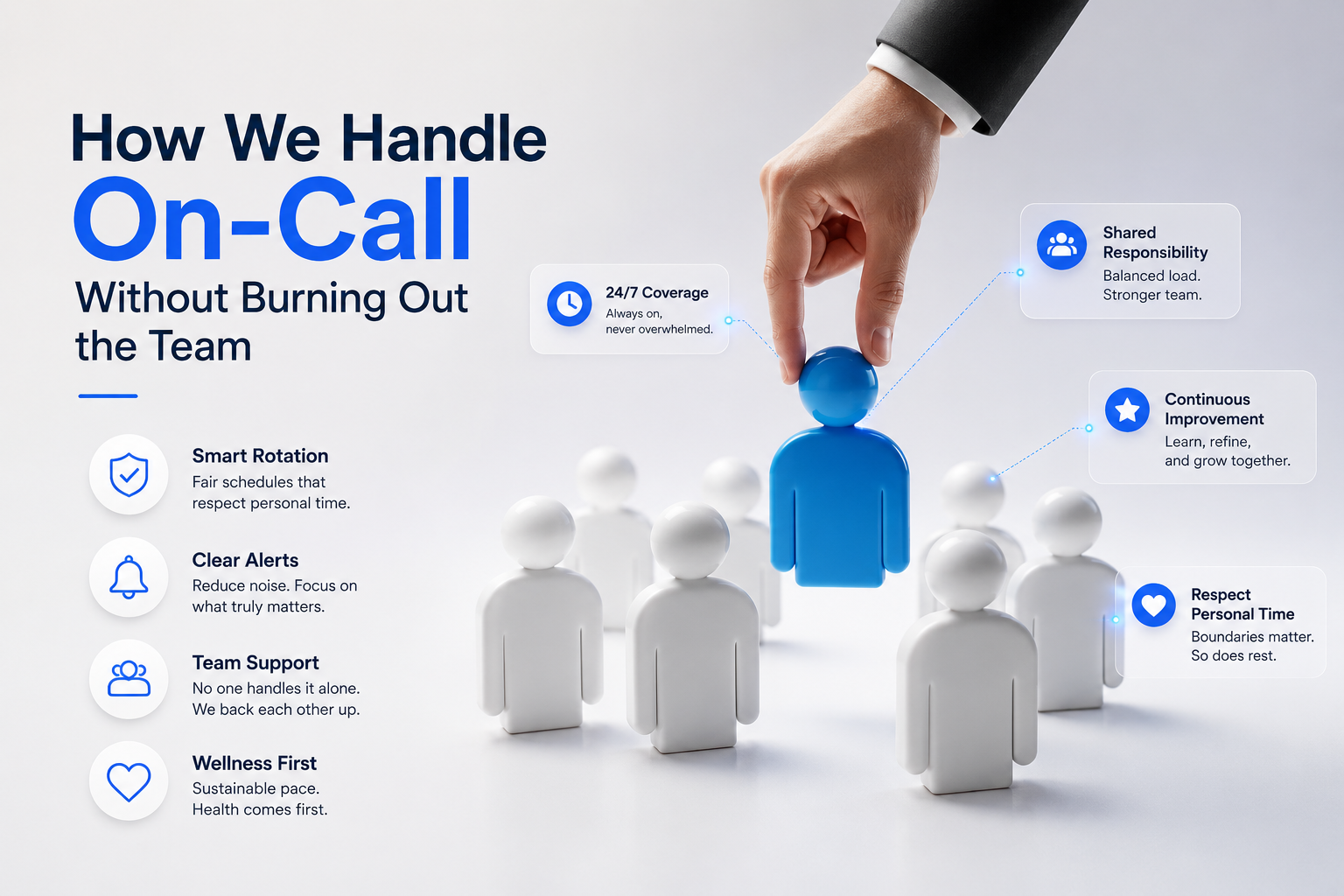
How We Handle On-Call Without Burning Out the Team
On-call rotations exist to catch problems fast. Poorly run, they also quietly wear a team down. Here's how we structure ours to do the first without causing the second.
Read more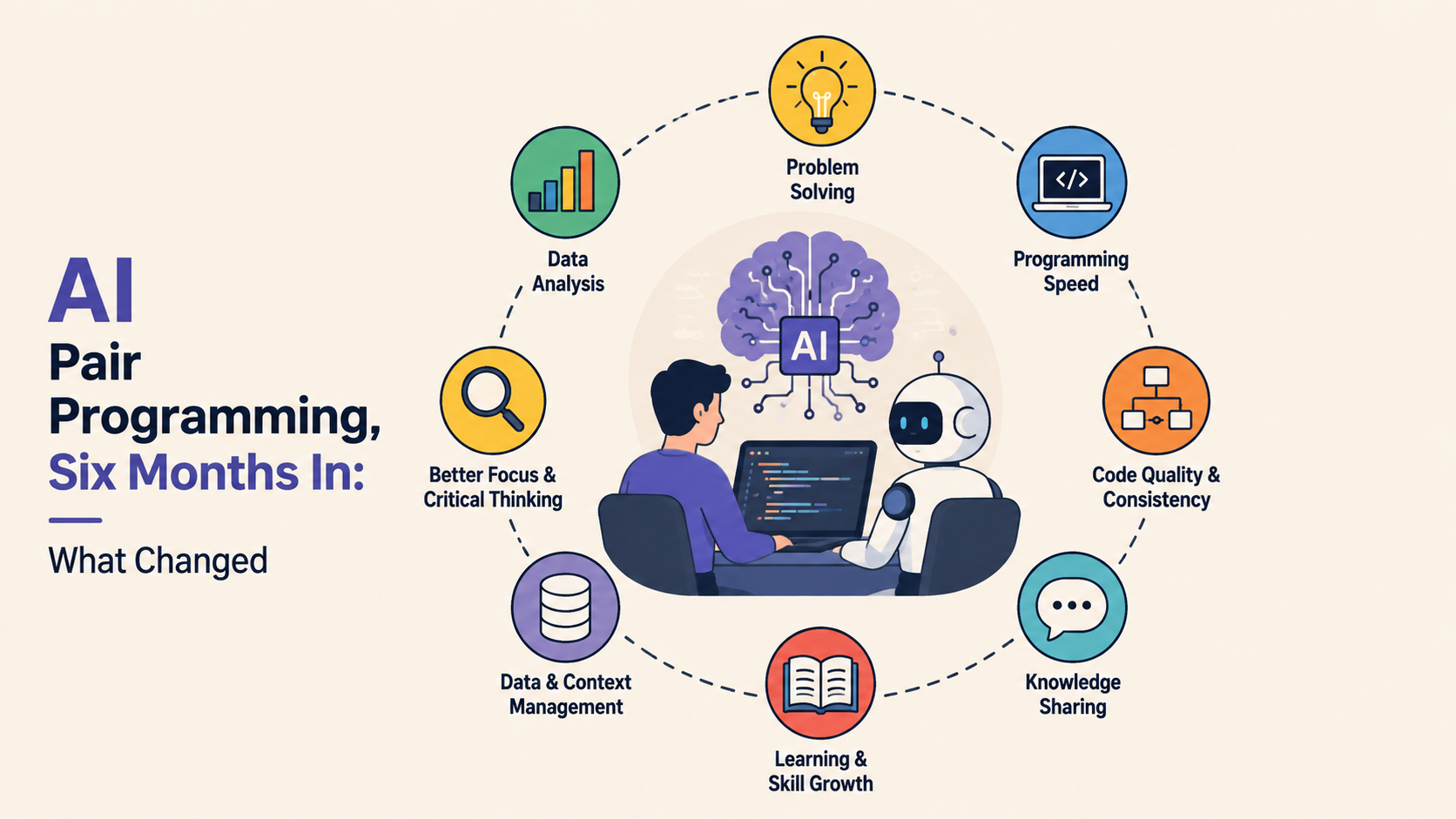
AI Pair Programming, Six Months In: What Changed
Six months of AI-assisted development changed less about our output and more about how our team spends its attention. Here's what actually shifted, in specific terms.
Read more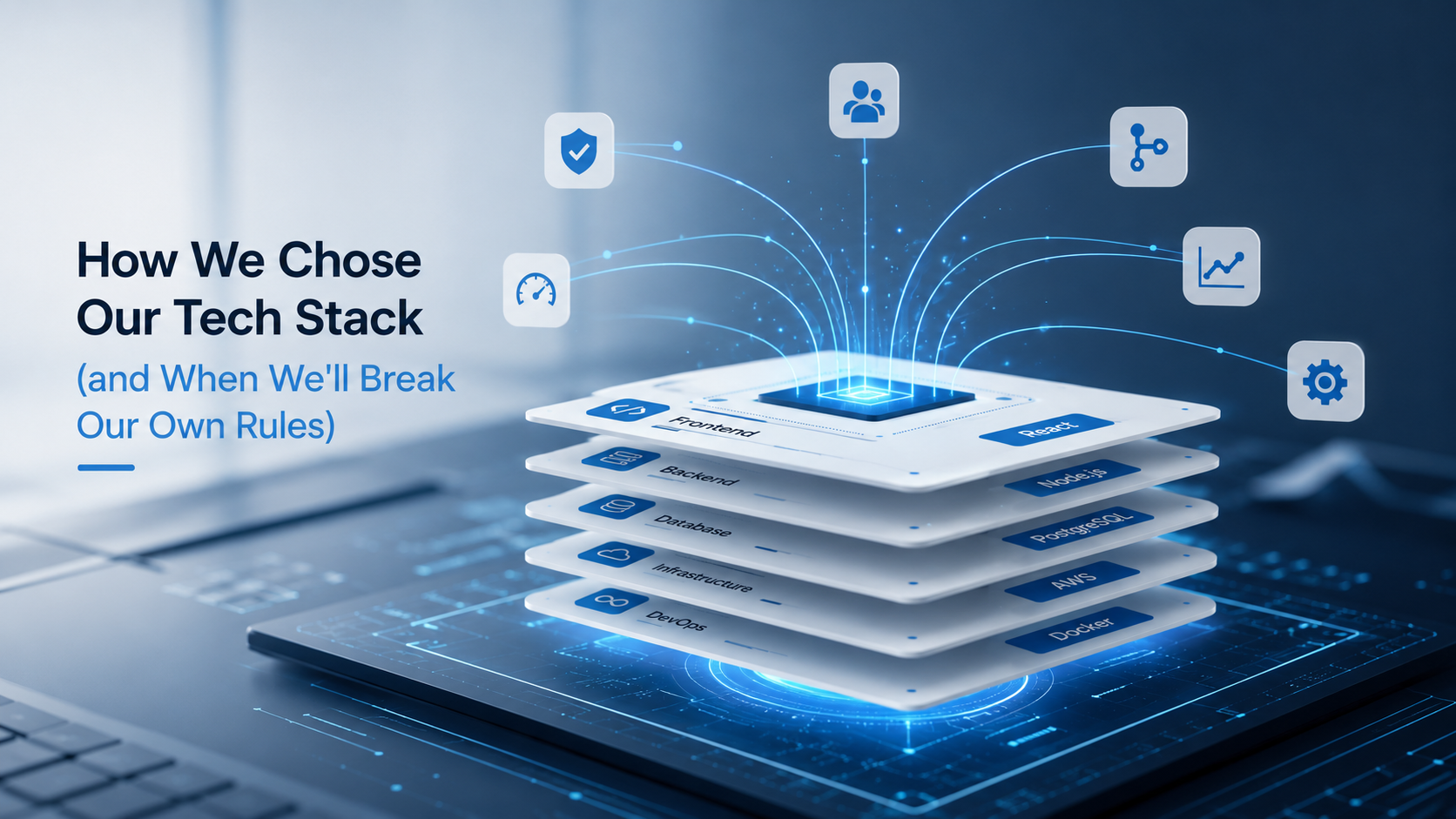
How We Chose Our Tech Stack (and When We'll Break Our Own Rules)
A default tech stack exists to save time on decisions that don't need to be re-litigated every project. Here's how we settled on ours, and the specific conditions under which we override it anyway.
Read more
Testing in Production vs Testing Before Production: Our Approach
"Testing in production" sounds like a shortcut or a joke, depending who you ask. In practice, it's a deliberate part of how we validate systems - used specifically, not as a substitute for testing before launch.
Read more
What We Won't Let AI Touch in Our Codebase
AI writes a meaningful share of our code now. It doesn't get access to all of it. Here's exactly where we draw the line, and why.
Read more
Why We Push Back on "Just Make It Like [Competitor]"
"Just build us what they have" is one of the most common requests we get - and one of the ones we push back on most. Here's why, and what we do instead.
Read more
The Bug That Taught Us to Change Our QA Process
Most process changes come from a whiteboard discussion. This one came from a bug that reached production and shouldn't have. Here's what happened, and what we changed because of it.
Read more
Rebuilding vs Patching: How We Decide a Legacy System's Fate
Every aging system eventually forces the same question: patch it again, or rebuild it properly? Here's the actual framework we use to decide - and why the answer is rarely as obvious as it first looks.
Read more
The Real Cost of Skipping a Discovery Phase
Discovery looks like the phase you can cut to save time and budget. In our experience, it's almost always the phase whose absence you pay for later, with interest.
Read more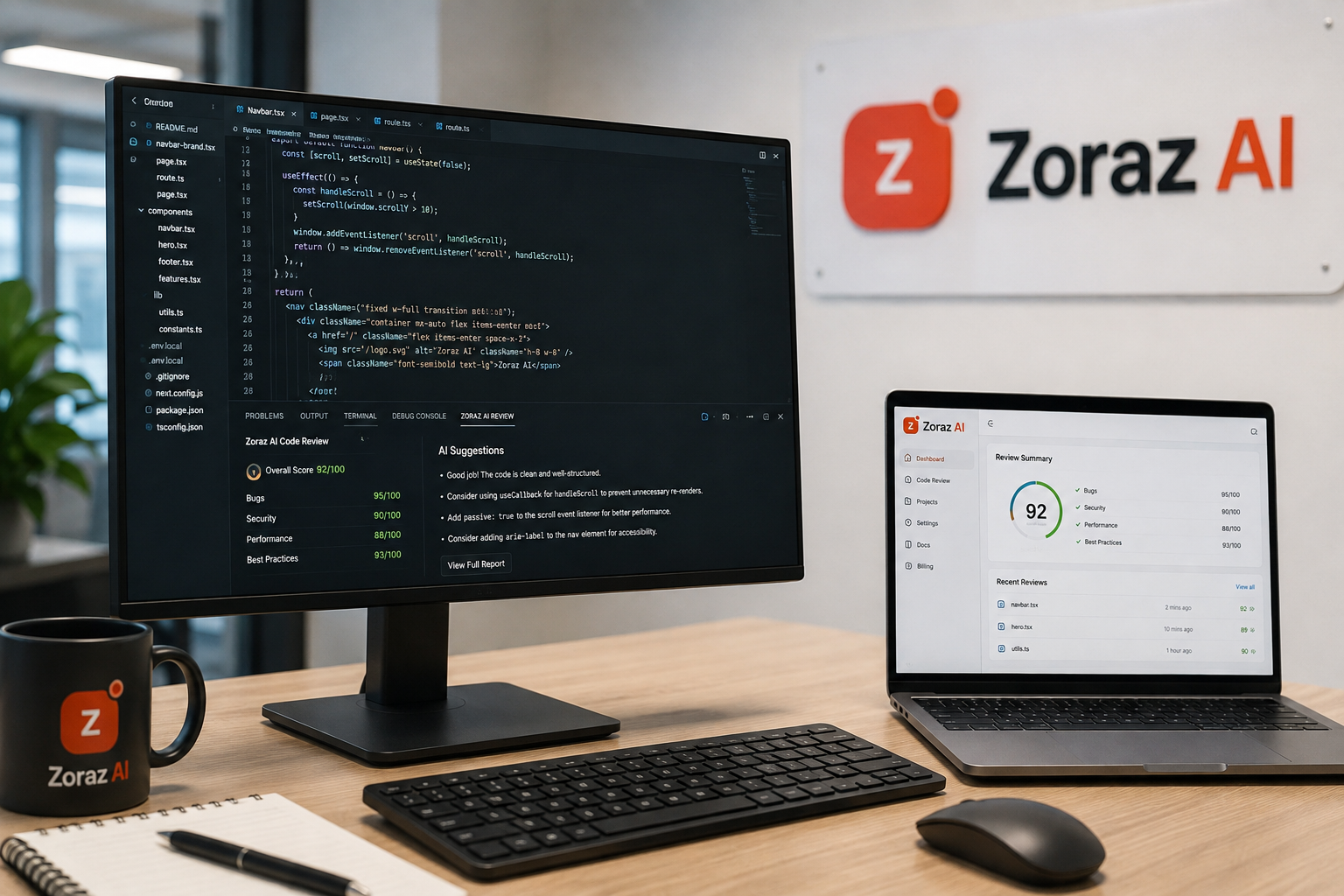
How Zoraz AI Reviews Its Own Code Before a Human Does
Before a human reviewer ever opens a pull request, Zoraz AI has already gone through it. Here's what that first pass actually catches - and what it deliberately leaves for a person to decide.
Read more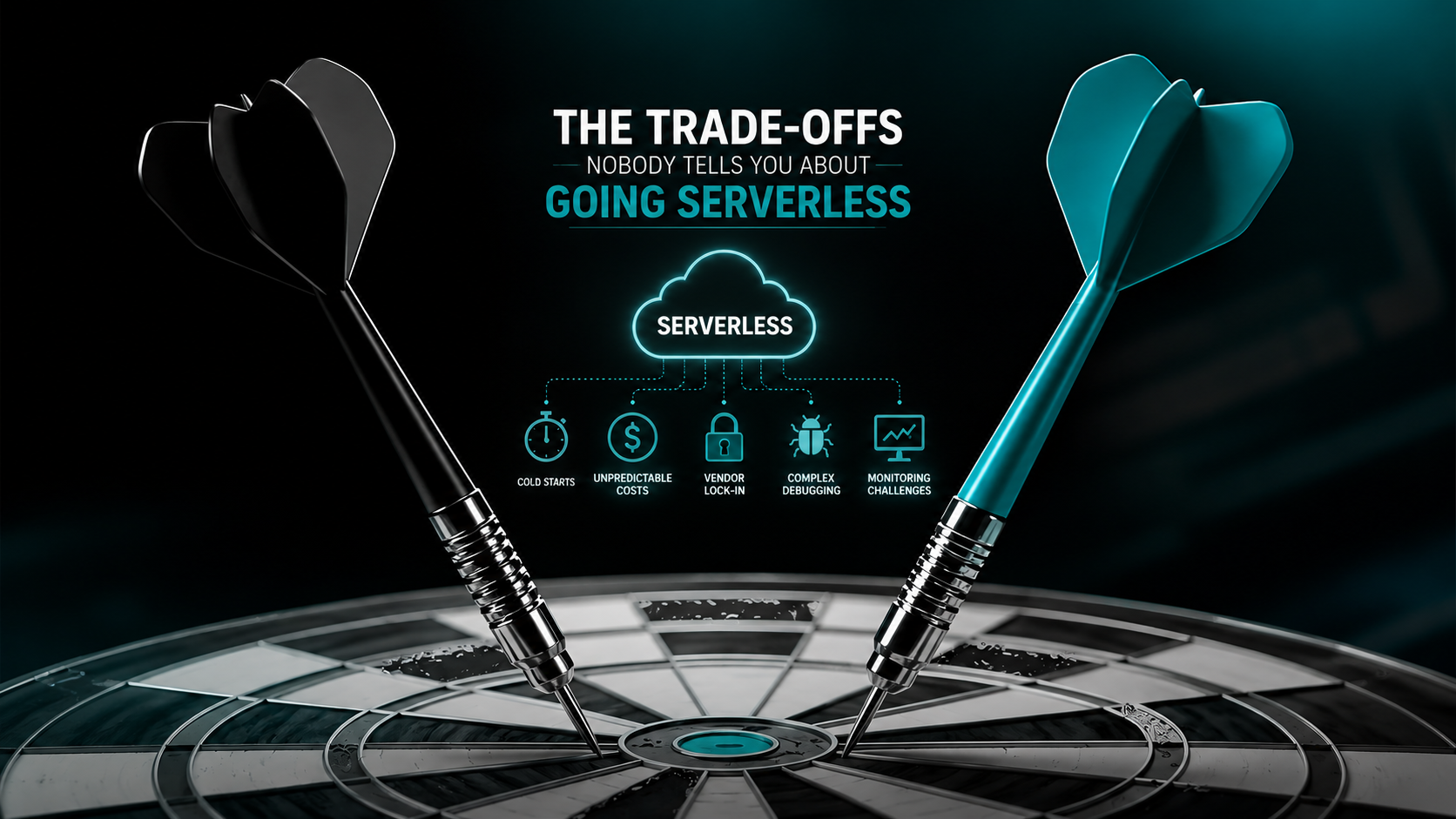
The Trade-offs Nobody Tells You About Going Serverless
Serverless gets pitched as the easy win — no servers to manage, pay only for what you use. It is genuinely powerful. It's also not free of cost in other ways. Here's what actually happens when we take a client serverless, good and bad.
Read more
How We Estimate Timelines Without Overpromising
Most project delays trace back to one place: the estimate. Here's the actual process we use to size up a project honestly, before a single line of code gets written.
Read more
What Actually Happens in Our Code Review
Every pull request — human-written or AI-drafted — goes through the same three checks before it merges. Here's exactly what we look for.
Read more
AI Alone Isn't Enough: Why Hybrid Development Wins
Generic AI-generated software creates more problems than it solves. Here's why human-validated, AI-accelerated development is the better path.
Read more
40% Faster Delivery Without Sacrificing Quality
How our engineers use AI to cut repetitive work out of the development cycle — and what that means for your timeline and budget.
Read more
Migrating a 6-Year-Old ERP Without a Single Day of Downtime
Notes from a recent migration: how we moved a manufacturing client off a PHP monolith without stopping their order pipeline.
Read more
Choosing the Right Architecture Before You Write Code
Why our process starts with planning, not prompting — and how it saves clients from expensive rewrites down the line.
Read more
A Security Audit Found One Bug in AI-Drafted Code. Here's What It Was.
We ran a third-party security audit on a project with AI-scaffolded modules. It found exactly one issue — and it's a useful example of why review still matters.
Read more