
The Trade-off Between Fast Iteration and Clean Architecture
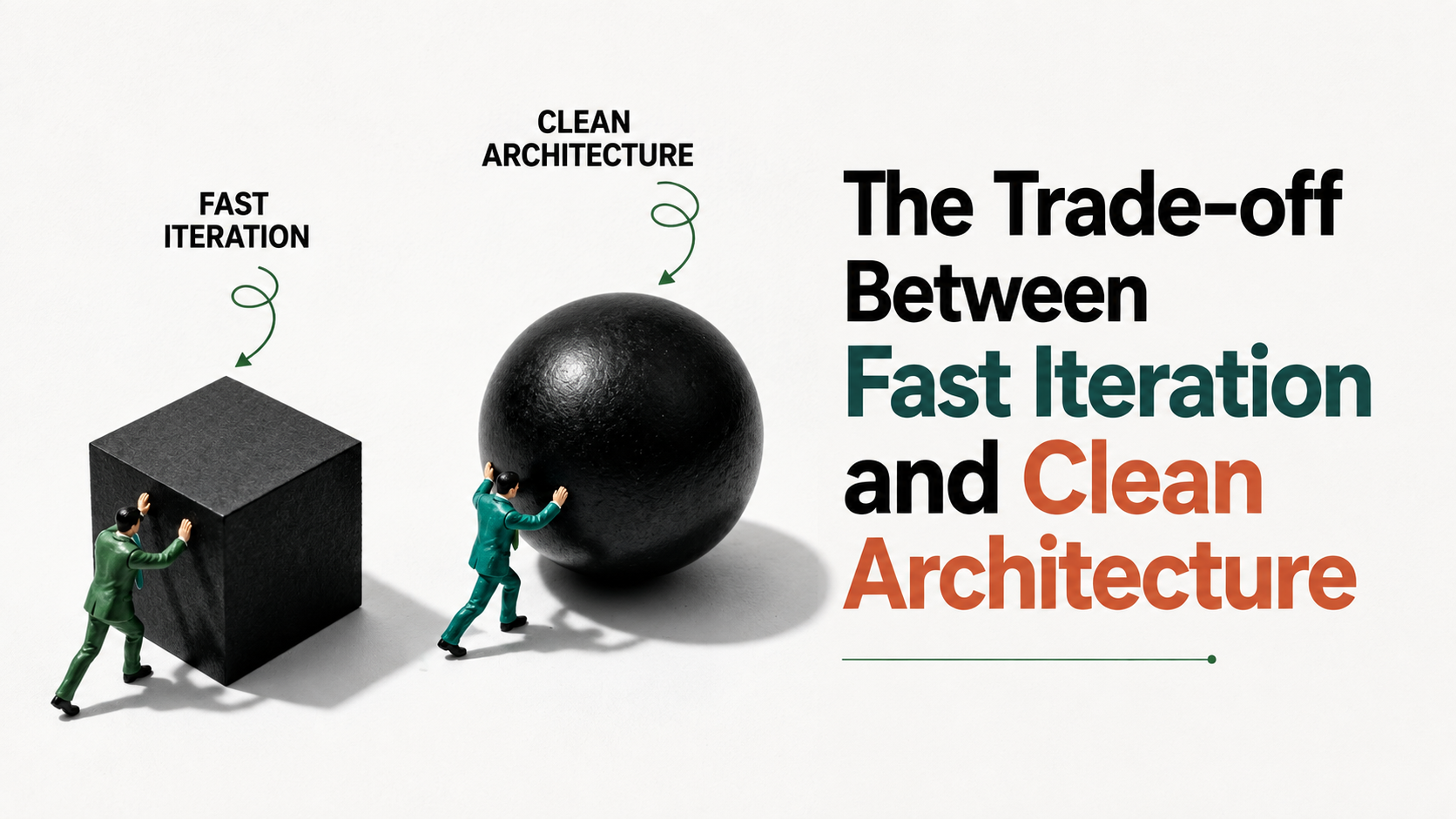
The speed-versus-structure decision made area by area, not once for the whole project
Every early-stage project runs into the same tension: move fast and figure out the architecture as you go, or invest upfront in a clean structure that costs more time now to save more time later. Neither extreme is right for an entire project, which is really the core lesson - this isn't a single decision made once, it's a series of smaller decisions made differently depending on what part of the system you're looking at.
Why We Don't Treat This as One Project-Wide Choice
Applying "move fast" uniformly produces a system riddled with the kind of undocumented, fragile shortcuts that make later changes expensive and risky. Applying "build it clean" uniformly means spending architectural effort on parts of the system that might not even exist in their current form once real usage reveals what the product actually needs - effort spent solving a problem you don't have yet. We make this call area by area, not once for the whole project.
Where We Lean Toward Speed
Features whose requirements are still genuinely uncertain - where user behavior or business needs might reshape them significantly once real feedback comes in - get built quickly and simply, deliberately accepting some future rework as the cost of not over-investing in structure for something that might change shape entirely. Polishing the architecture of a feature that gets substantially reworked or cut two weeks later isn't caution, it's wasted effort.
Where We Don't Compromise on Structure, Even Early
Core domain logic that other parts of the system will depend on, data models that are expensive to migrate later, and anything touching the categories we've written about keeping under strict human control - authentication, financial calculations, security-sensitive configuration - get proper architectural investment from the start, regardless of project stage. These are exactly the areas where a quick-and-dirty shortcut compounds into real cost later, because everything else in the system ends up built on top of the shortcut.
The Signal We Actually Watch For
The clearest indicator that a fast, loose implementation needs to become a properly architected one is repetition - the same workaround pattern showing up in multiple places, or the same category of bug recurring in a specific area, similar to what we've written about triggering QA process changes. A single instance of moving fast and accepting some mess is a reasonable trade-off. The same mess appearing three times means the underlying structure needs real investment, not another quick patch.
How This Plays Out in Practice
On a typical early-stage client project, we'll build the initial user-facing feature set quickly, with straightforward, easy-to-modify code, while investing real architectural care in the data layer and any integration points that would be expensive to restructure later. As the product stabilizes and specific parts prove out, we go back and harden the areas that turned out to matter, rather than trying to predict upfront exactly which parts those will be.
Why We're Explicit About This With Clients
Clients sometimes read "move fast" as cutting corners across the board, or read "invest in architecture" as unnecessary delay on features that don't need it. We're specific with clients about which category a given piece of work falls into and why, because the trade-off itself is reasonable - it's an unexplained trade-off that erodes trust, not the trade-off itself.
Frequently Asked Questions
Is it better to move fast or build clean architecture from the start?
Neither, applied uniformly. The decision should be made area by area based on how uncertain the requirements are and how expensive a shortcut would be to unwind later.
Which parts of a project get architectural investment even early on?
Core domain logic other parts depend on, data models that are costly to migrate, and sensitive areas like authentication and financial calculations, regardless of project stage.
How do you know when a "move fast" shortcut needs to become a proper architectural fix?
Repetition - the same workaround appearing in multiple places, or the same category of bug recurring, signals the underlying structure needs real investment rather than another quick patch.
How do you communicate this trade-off to clients?
By being specific about which category a given piece of work falls into and why, since an unexplained trade-off erodes trust more than the trade-off itself.
Ready to build something like this?
Let’s talk about what AI-accelerated, human-validated development can do for your business.
Start Your Project