The Difference Between an AI Assistant and an AI Agent (and Why It Changes Your Budget)
Why the AI assistant versus AI agent distinction directly affects project scope and cost
Introduction
"AI assistant" and "AI agent" are frequently used as if they're the same thing, sometimes even within the same vendor conversation. They're not, and the difference isn't just terminology — it directly determines project scope, complexity, and cost. Understanding the distinction before scoping a project prevents budgeting for one thing and receiving another.
What an AI Assistant Actually Is
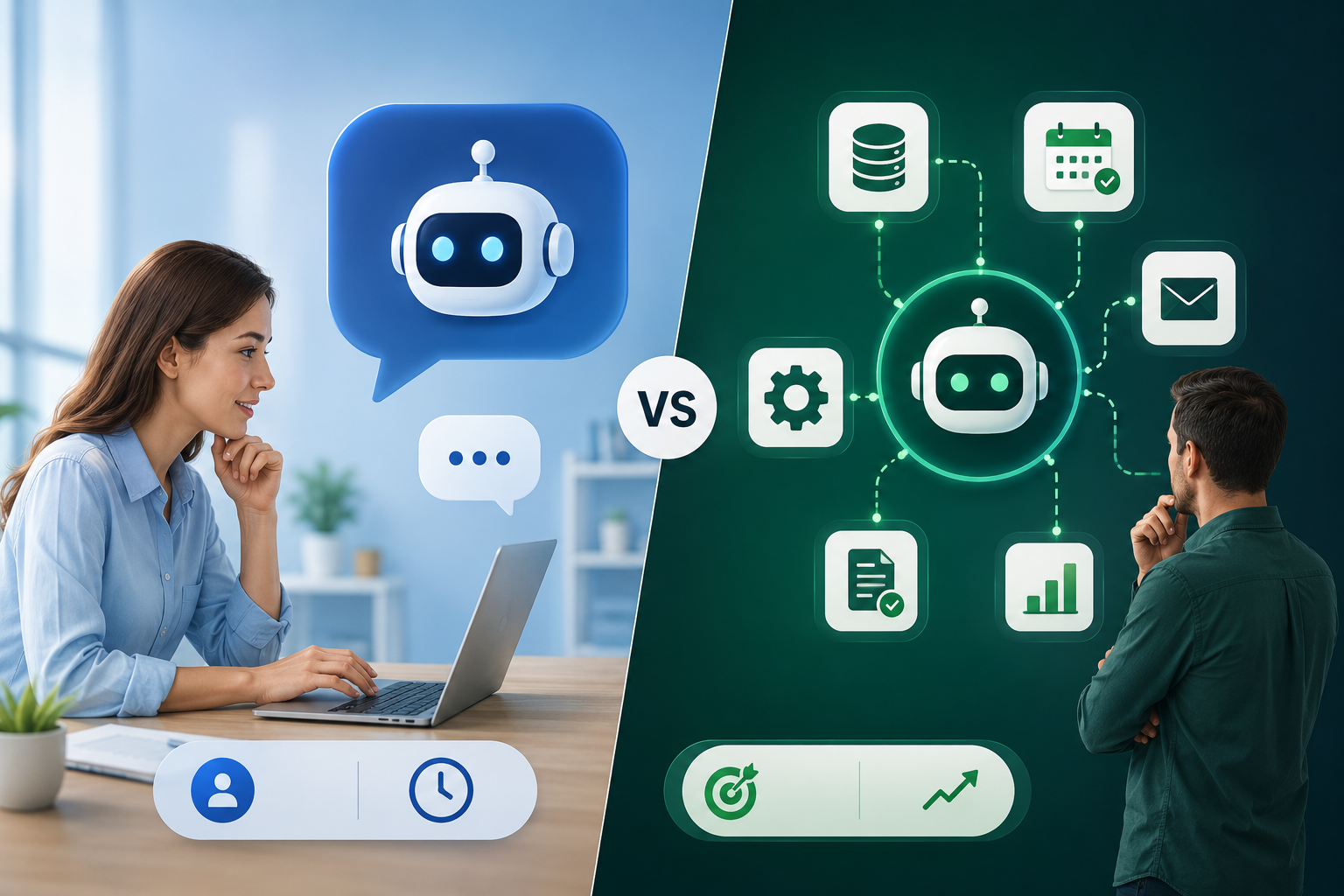
An AI assistant responds to requests and provides information, drafts, or answers within a single interaction or conversation. It's reactive — it does what's asked, when asked, and doesn't independently decide to take further action or pursue a goal beyond responding to the immediate request.
What an AI Agent Actually Is
An AI agent is given a goal and works toward it with a degree of autonomy — taking multiple steps, making decisions about what to do next based on what it discovers along the way, and potentially taking real actions in other systems without being explicitly directed for each individual step.
Why This Distinction Directly Affects Cost
Assistants Are Largely Single-Interaction Systems
An AI assistant typically needs less orchestration logic — it receives an input, processes it, and returns an output. This is a meaningfully simpler system to build than one that needs to plan, execute, and adapt across multiple steps.
Agents Require Orchestration, State, and Decision Logic
An AI agent needs infrastructure to track its progress toward a goal, decide what to do next based on results so far, and handle situations where the straightforward path doesn't work. This orchestration layer is a substantial part of AI agent development cost that a simple assistant doesn't require.
Agents Usually Need Deeper System Integration
Because agents often take real actions — updating records, triggering workflows, pulling live data to inform their next step — they typically require more extensive AI integration work than an assistant that mostly needs to read information and respond.
Agents Need More Robust Error Handling and Safeguards
As covered elsewhere, an agent taking real actions needs defined behavior for uncertainty, escalation paths, and safeguards proportional to the stakes of what it's authorized to do. This reliability engineering adds real cost that a request-and-respond assistant doesn't carry to the same degree.
Why Vendors Sometimes Blur This Distinction
"AI agent" carries more perceived sophistication and value than "AI assistant" in a sales conversation, which creates an incentive to use the more impressive-sounding term even when the actual system being proposed is closer to an assistant. This isn't always deliberate misrepresentation — but it means the label alone isn't a reliable way to know what you're actually being quoted for.
Questions to Ask to Clarify What You're Actually Getting
Ask directly whether the proposed system takes multiple autonomous steps toward a goal or primarily responds to individual requests. Ask whether it takes real actions in other systems or mainly provides information and drafts. Ask what happens when it encounters something it wasn't specifically built to handle. The answers tell you more about actual scope than either label does on its own.
Matching the Right System to Your Actual Need
Not every use case that sounds sophisticated actually needs full agent capability. If your need is genuinely single-interaction — answer this, draft that, summarize this — an AI assistant is simpler, faster to build, and appropriately priced for that scope. Paying for agent-level orchestration and safeguards you don't actually need is as much of a mismatch as under-scoping a genuinely multi-step, autonomous use case as if it were a simple assistant.
Frequently Asked Questions
What's the actual difference between an AI assistant and an AI agent?
An AI assistant responds to individual requests within a single interaction. An AI agent works autonomously toward a goal across multiple steps, making decisions and potentially taking real actions along the way.
Why does an AI agent typically cost more than an AI assistant?
Agents require orchestration logic, state tracking, deeper system integration, and more robust error handling for autonomous actions — infrastructure a simple request-and-respond assistant doesn't need.
Why do vendors sometimes use "AI agent" and "AI assistant" interchangeably?
"AI agent" carries more perceived sophistication in sales conversations, which can create an incentive to use the term even when the proposed system is closer to an assistant.
How can I tell what I'm actually being quoted for?
Ask whether the system takes multiple autonomous steps or responds to individual requests, whether it takes real actions in other systems, and what happens when it encounters something unexpected.
Ready to build something like this?
Let’s talk about what AI-accelerated, human-validated development can do for your business.
Start Your Project