AI Integration Without Disrupting Your Existing Systems: A Practical Guide
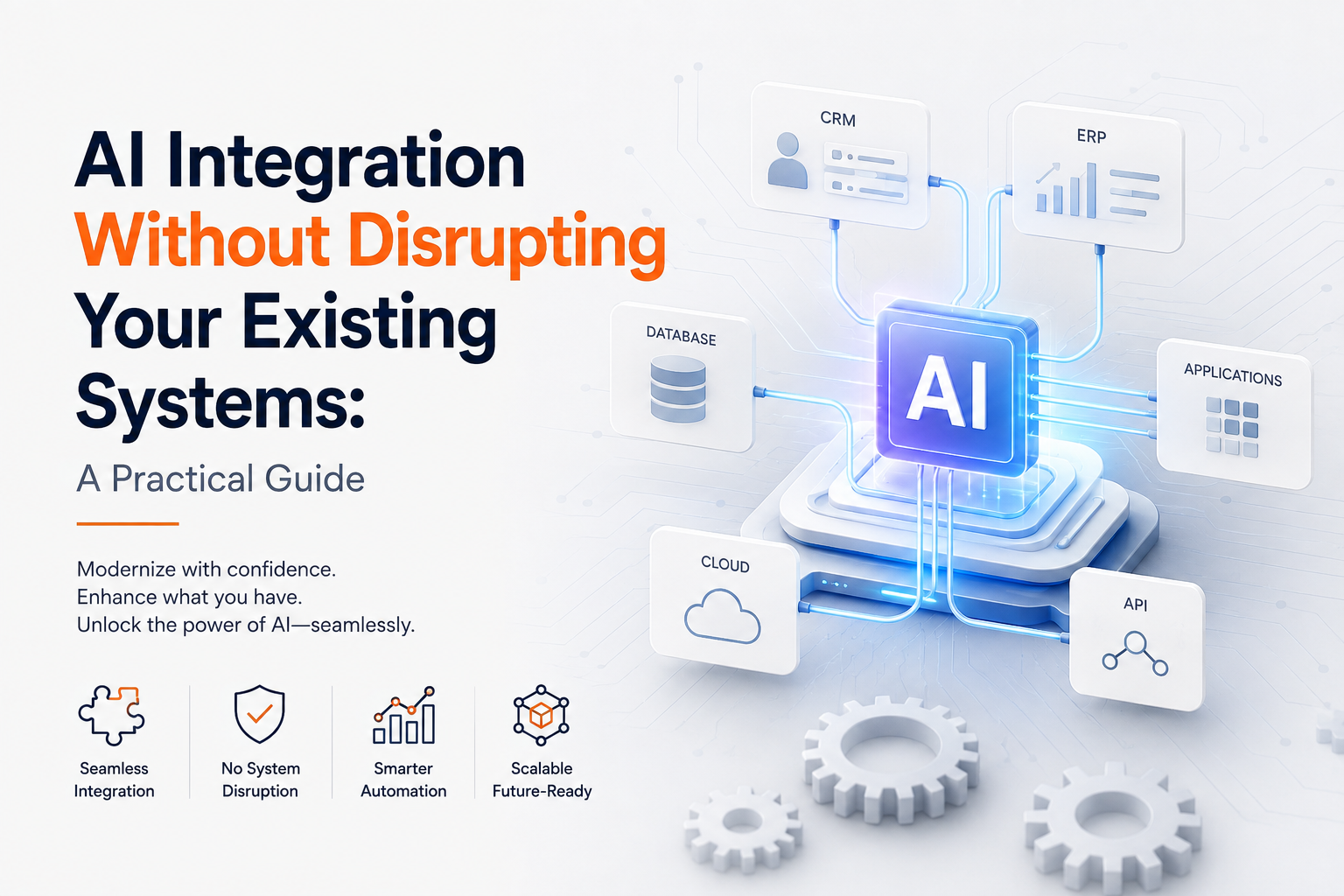
Connecting AI into existing systems through APIs and middleware, without a full rebuild
Introduction
One of the biggest misconceptions holding businesses back from adopting AI is the assumption that it requires replacing core systems that already work. In most cases, it doesn't.
Why "Rip and Replace" Is Rarely the Right Approach
Core business systems represent years of accumulated process and data structure. Replacing them to accommodate AI introduces unnecessary cost and disruption.
How AI Actually Layers Onto Existing Systems
Reading From Existing Data Without Restructuring It
RAG development can work with your existing data largely as-is, without requiring migration into a new format first.
Working Alongside Existing Workflows, Not Replacing Them
AI agents and automation can be introduced at specific points in a workflow while the surrounding process stays exactly as your team already knows it.
Using APIs and Middleware Instead of Core System Changes
Most legacy systems have some form of API or export capability that allows AI tools to connect without touching the underlying system directly.
A Practical Path for Layering AI In
Start With One High-Value, Low-Risk Workflow
Identify a specific, contained workflow where AI adds clear value without touching mission-critical processes on day one.
Map Exactly What Data the AI Needs Access To
Get specific about what data is actually needed and confirm it's accessible in a usable form before integration work begins.
Build the Connection Point, Not a New System
The goal is a connection into your current systems, not a replacement of them.
Test in a Contained Environment Before Full Rollout
Validate against real, limited usage before expanding across the organization.
Expand Gradually, Based on What's Actually Working
Extend the integration approach deliberately, rather than assuming success in one area guarantees success everywhere.
When Deeper System Changes Actually Are Necessary
Some legacy systems are genuinely too limited to support meaningful AI integration. This should be a conclusion reached after evaluating the actual system, not a default assumption.
Frequently Asked Questions
Do I need to replace my CRM or ERP to use AI effectively?
In most cases, no. AI tools can typically connect through APIs or middleware without a full system replacement.
What's the safest way to start integrating AI into existing workflows?
Begin with one contained, high-value workflow, test against real but limited usage, and expand based on results.
Can AI work with old or messy legacy data?
Often yes, particularly with RAG-based approaches, though some legacy systems may require deeper technical work first.
How do I know if my systems need to change before adding AI?
This depends on whether your current systems have a usable API or data access method - an AI integration assessment can determine this upfront.
Ready to build something like this?
Let’s talk about what AI-accelerated, human-validated development can do for your business.
Start Your Project