
How We Onboard a New Developer Onto an Existing Codebase
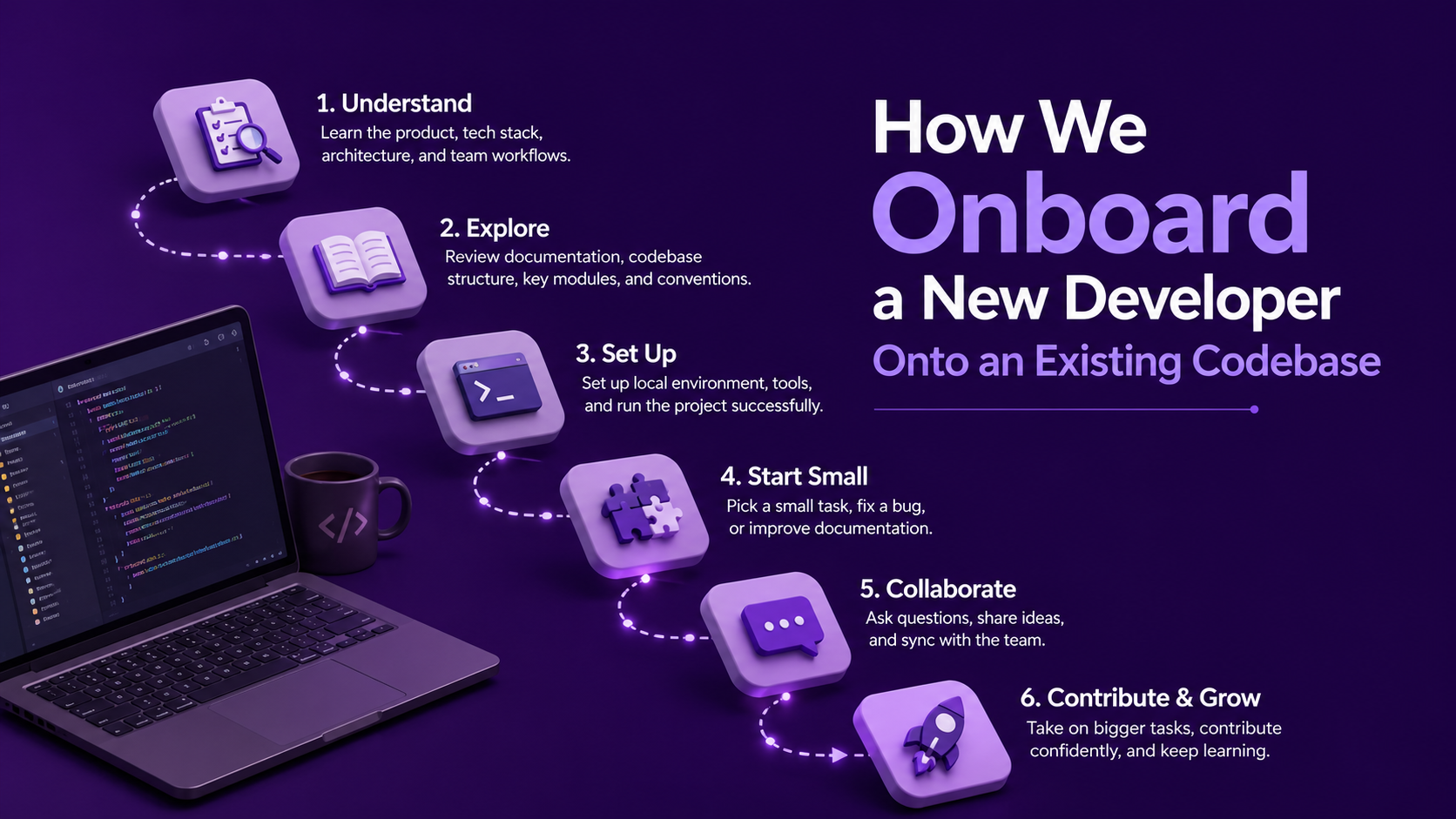
Structured pairing and low-stakes first tasks, chosen for coverage rather than urgency
Bringing a new developer onto an existing codebase is a different problem than onboarding someone into a company generally. It's less about culture and tools, and more about how quickly someone can understand a system well enough to change it safely without breaking something they didn't know was load-bearing. We've refined this process specifically because getting it wrong is expensive in a very particular way - a developer who starts making changes before they understand the system doesn't just work slowly, they introduce risk.
We Don't Start With the Codebase
The instinct is to hand someone the repository and a list of tickets. We start somewhere else: the decision records we've written about maintaining, the reasoning behind non-obvious architectural choices, and a walkthrough of what the system is actually for from a business standpoint, not just a technical one. Understanding why a system is shaped the way it is prevents the exact mistake we've written about elsewhere - someone "simplifying" something that was deliberate, because they didn't have the context to know it wasn't a mistake.
First Changes Are Deliberately Low-Stakes and High-Coverage
A new developer's first real tasks aren't picked by urgency - they're picked to expose them to as much of the system's structure as possible with minimal risk if something goes wrong. A small, well-contained bug fix that touches a few different layers of the application teaches more about how the system fits together than a larger, isolated feature would, and it does so without putting anything consequential on the line while they're still building context.
Pairing Happens on Purpose, Not Just When Someone Asks
We schedule structured pairing sessions in the first weeks specifically, rather than leaving it to the new developer to ask for help - because someone new to a codebase often doesn't yet know what they don't know, which makes it hard to know when to ask. A scheduled walkthrough of a specific subsystem, with someone who already understands it, surfaces questions that wouldn't have come up otherwise.
We Watch for Specific Signals, Not Just Time Elapsed
Rather than assuming someone is "ramped up" after a fixed number of weeks, we look for concrete signals: are their pull requests requiring fewer context-related corrections in review, are they able to explain why a piece of existing code works the way it does rather than just what it does, and are they starting to independently identify where a proposed change might have unintended effects elsewhere in the system. These are better indicators of real fluency than a calendar date, and they vary meaningfully by codebase complexity and by the individual.
What Slows This Down When We Skip Steps
We've seen the cost of skipping this process directly - a developer put straight onto urgent client work without the onboarding structure above, moving fast initially, and then requiring more review correction and producing more subtle bugs over the following months than someone who ramped up more gradually. The upfront time this process takes isn't lost time. It's time that would otherwise be spent later, less predictably, fixing what fast-but-uninformed changes introduced.
Why This Matters More for Client Projects Specifically
Internal tools tolerate a slower ramp-up better than active client engagements do, where timeline commitments and code quality both matter immediately. Getting a new developer productive quickly and safely on a client codebase isn't optional polish - it directly affects whether we hit the estimates we've committed to, which is exactly the kind of commitment we've written about taking seriously elsewhere.
Frequently Asked Questions
What's the first thing a new developer does when joining an existing project?
Not code - they review decision records and get a walkthrough of the system's purpose and reasoning, to avoid the common mistake of changing something deliberate without realizing it.
How do you choose a new developer's first tasks?
For coverage rather than urgency — small, low-risk changes that touch multiple parts of the system teach more about its structure than an isolated feature would.
How do you know when someone is actually ramped up?
By specific signals - fewer context-related review corrections, the ability to explain why existing code works a certain way, and independently spotting where a change might have unintended effects - not by a fixed timeline.
What happens when this onboarding process gets skipped?
We've seen developers placed directly on urgent work without it produce more review corrections and subtler bugs over the following months than those who ramped up gradually.
Ready to build something like this?
Let’s talk about what AI-accelerated, human-validated development can do for your business.
Start Your Project